Silica Sleeve for Aerospace Cable and Wire Heat Protection
Aerospace wiring can pass through compact areas containing engines, exhaust ducts, auxiliary power equipment, heated structures and other concentrated heat sources. In these locations, cable routing is restricted by space, weight, accessibility and the surrounding mechanical systems.
Where a cable or wire bundle requires additional external thermal protection, a silica sleeve for aerospace applications can provide a flexible high-temperature textile barrier around suitable electrical and instrumentation assemblies.
The sleeve should not be selected from temperature capability alone. Aerospace cable protection requires careful consideration of cable temperature limits, diameter, connectors, routing, vibration, abrasion, weight, installation space and the qualification requirements of the final system.
BSTFLEX manufactures high temperature silica sleeving in braided and texturized constructions for demanding thermal protection applications.

Why Aerospace Wiring Creates a Difficult Thermal Protection Problem
Industrial equipment often allows additional space to be created around a hot component. Aerospace assemblies usually offer far less freedom.
Cables may share restricted routing areas with:
- Hot ducts
- Engine components
- Exhaust-adjacent structures
- Hydraulic and fluid lines
- Actuators
- Sensors
- Electrical equipment
- Structural members
Moving the cable farther away from the heat source may not always be practical.
A flexible aerospace thermal protection sleeve can therefore be considered as one element of the thermal-management system where the material and construction meet the project's engineering requirements.
The Cable Usually Has a Lower Temperature Limit Than the Heat Source
A hot engine or exhaust component may operate at a temperature far above the allowable continuous temperature of the nearby electrical cable.
The objective of a protective sleeve is not simply to survive the heat source.
It is to reduce the thermal load reaching the protected cable.
Several temperatures should therefore be separated during design:
| Temperature | Engineering Meaning |
|---|---|
| Heat-source temperature | Temperature of the nearby engine, duct, exhaust or hot structure |
| Local ambient temperature | Air temperature surrounding the cable assembly |
| Sleeve surface temperature | Thermal condition experienced by the outer sleeve |
| Cable surface temperature | Temperature reaching the protected cable |
| Cable allowable temperature | Maximum temperature permitted by the cable specification |
The last value defines the actual protection objective.
Radiant Heat Can Affect Wiring Without Physical Contact
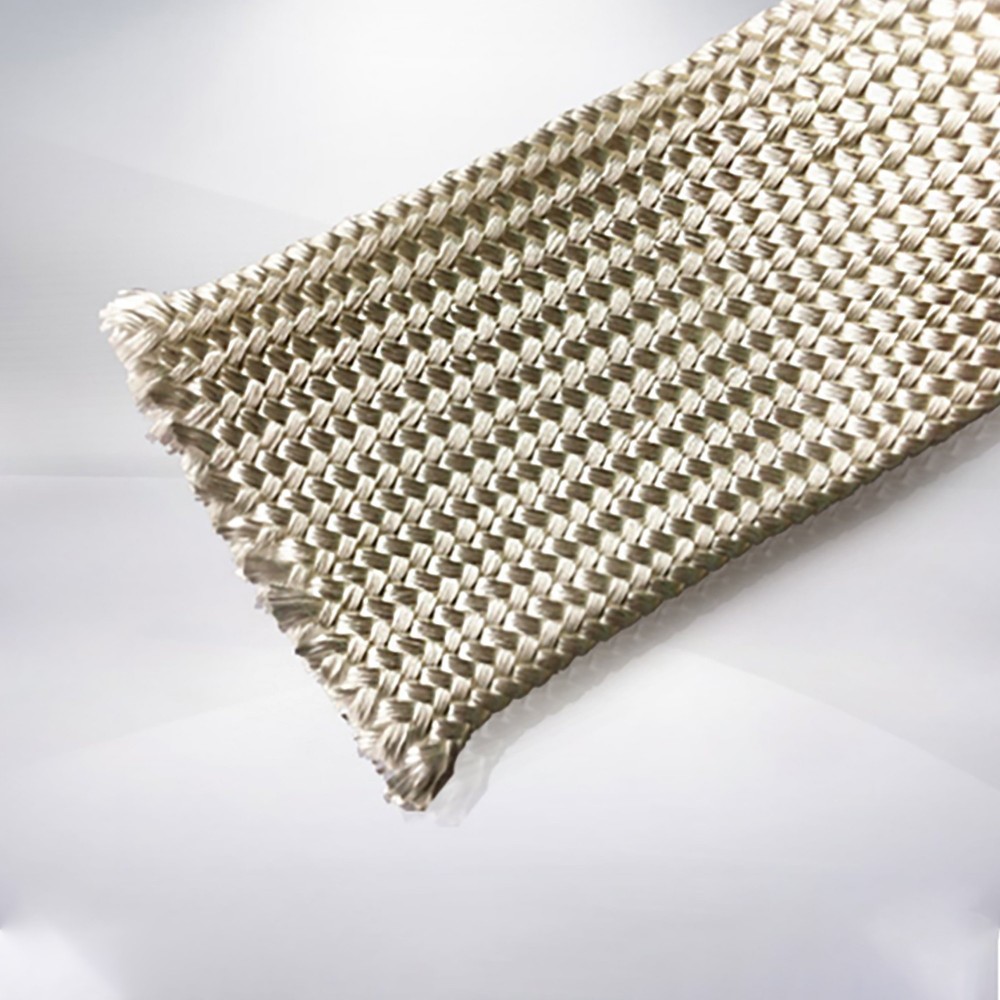
A cable does not need to touch an engine or exhaust component to experience damaging heat.
Hot metal surfaces radiate thermal energy across open space. A wire bundle with an air gap between itself and the heat source can therefore continue to gain heat during operation.
Radiant exposure depends on:
- Surface temperature of the heat source
- Distance from the cable
- Orientation
- Exposed surface area
- Duration of operation
- Air movement
- Other thermal barriers between the two components
A silica sleeve for aerospace cable can provide an additional textile layer around the cable where severe radiant exposure is present.
Engine-Adjacent Cable Protection
Engine environments combine elevated temperatures with vibration and restricted installation space.
Electrical and instrumentation cables may be routed around hot sections while still needing access to sensors, actuators and control equipment.
Potential protection locations can include cable sections routed near:
- Hot engine surfaces
- Exhaust-related components
- High-temperature ducts
- Sensor locations
- Fluid lines carrying heated media
The actual application should be reviewed using the measured or calculated thermal environment rather than assuming that all engine-area wiring requires the same sleeve construction.
Auxiliary Power Unit Areas
Auxiliary power equipment can create another concentrated thermal zone.
Depending on the system architecture, wiring and sensor leads may be located around equipment that generates substantial heat during operation.
A high-temperature sleeve can be considered where the cable requires additional external thermal protection and where the selected textile meets the relevant system requirements.
Continuous operating duration should be included in the specification because a long-duration thermal exposure can produce a different cable temperature from a brief heat event.
Exhaust-Adjacent Aerospace Wiring
Exhaust-related areas create a particularly strong radiant heat source.
For wiring located beside a hot exhaust component, the sleeve should normally be sized around the cable or wire bundle requiring protection rather than around the exhaust pipe.
Important parameters include:
- Cable bundle outside diameter
- Distance from the exhaust surface
- Exhaust surface temperature
- Maximum cable temperature
- Exposure duration
- Available installation clearance
Direct insulation of an exhaust pipe is a different thermal problem and should be evaluated separately from protecting a cable located near the exhaust.
Diameter Is Critical in Space-Constrained Assemblies
In an aerospace assembly, increasing sleeve diameter can affect neighboring components and installation clearances.
The correct aerospace wire protection sleeve should therefore be selected from the finished cable assembly rather than from conductor size alone.
Measure:
| Dimension | Reason |
|---|---|
| Single cable OD | Defines the minimum basic sleeve size |
| Wire bundle OD | Required when several wires are protected together |
| Connector OD | Important if the sleeve must pass over a completed connector |
| Branch dimensions | Important for harness transitions |
| Maximum permitted installed OD | Confirms available installation space |
Connector Size Can Change the Sleeve Requirement
A cable may have a small body diameter but terminate in a much larger connector.
If the silica sleeve is installed before connector assembly, it can normally be selected around the cable or harness body.
If the sleeve must be installed over an existing connector, the required expansion or sleeve diameter can be significantly larger.
Oversizing the complete sleeve solely to pass one connector can create excessive looseness along the remaining cable length.
For production assemblies, installation sequence should therefore be defined before the final sleeve diameter is approved.
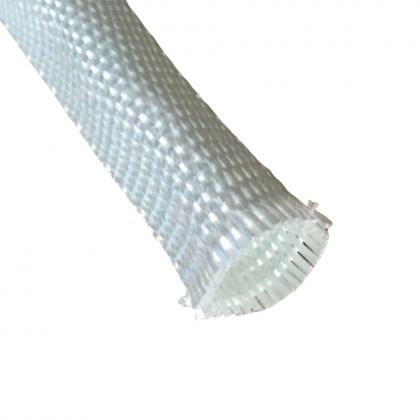
Braided Silica Sleeve for Flexible Cable Routing
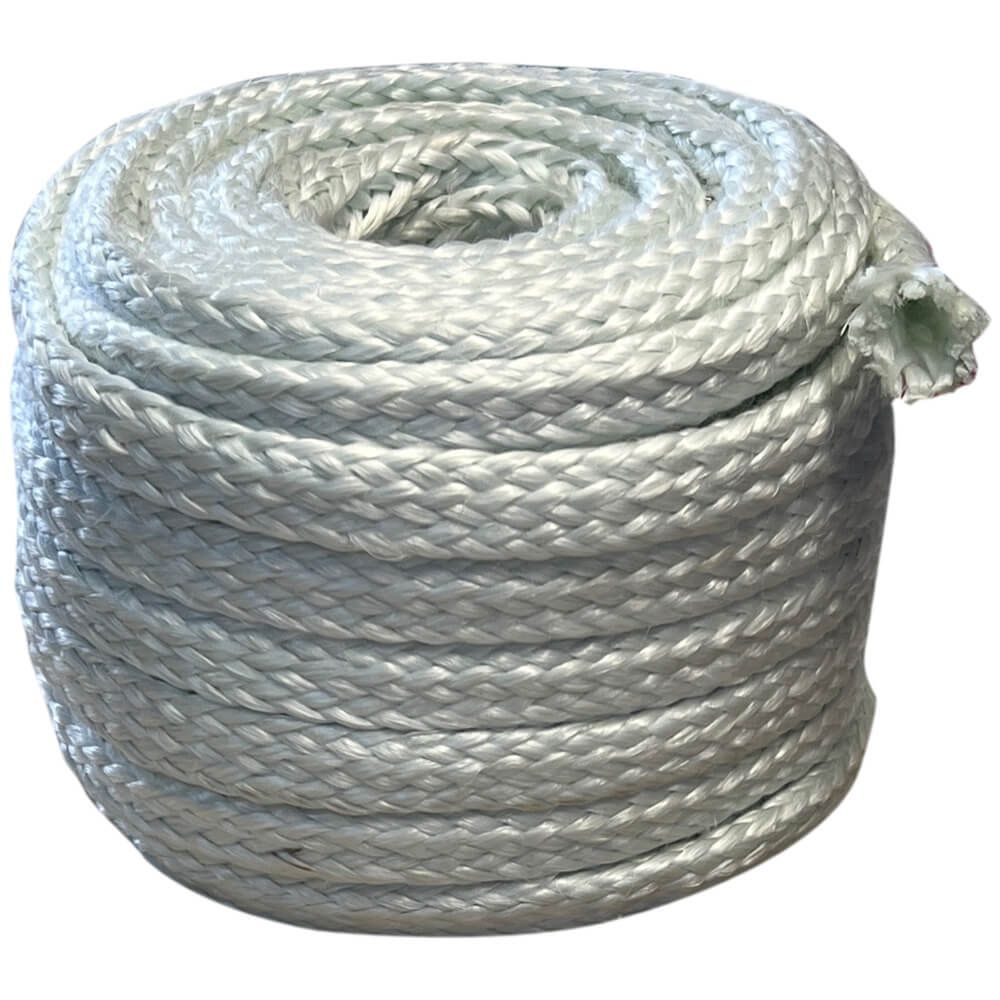
Braiding creates a tubular textile structure capable of following curved routing while maintaining coverage around the cable.
This makes braided silica sleeve relevant where a protected cable must pass through a series of bends or restricted areas.
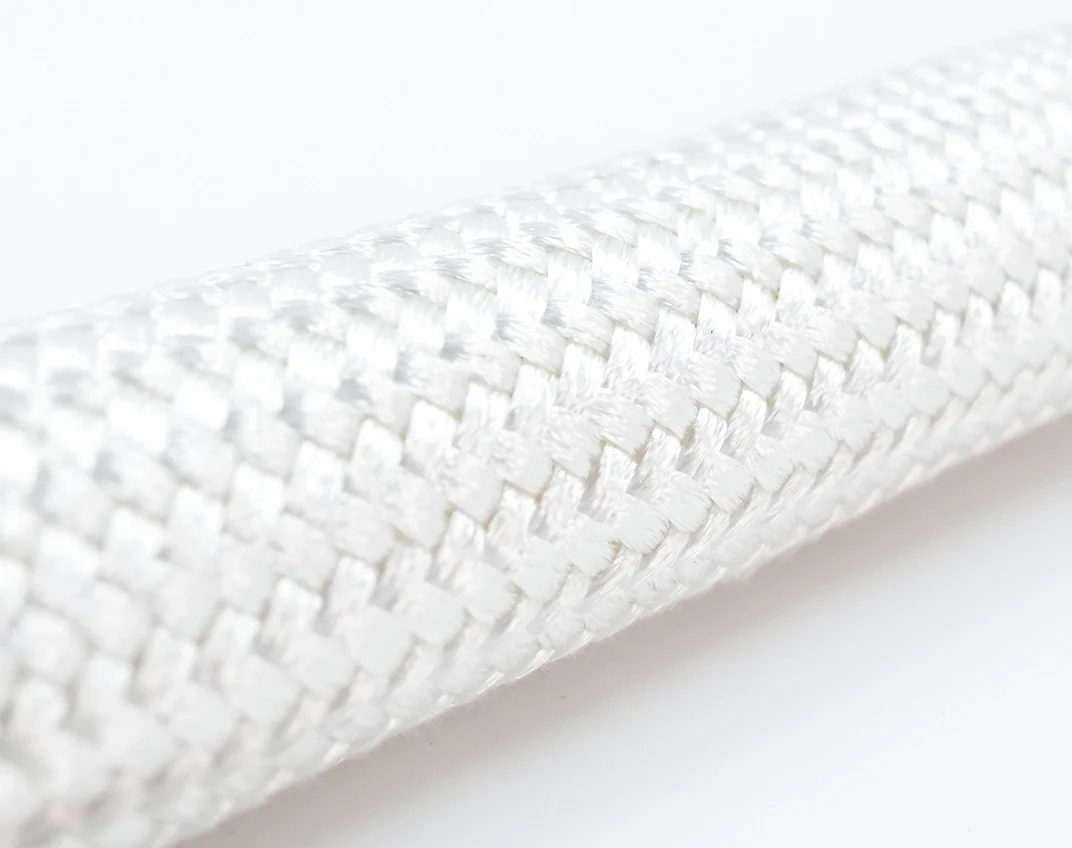
BSTFLEX's High Temperature Resistant Braided Silica Sleeve is manufactured for flexible thermal protection of cables, wires, hoses and related high-temperature components.
The current product specification lists maximum temperature resistance up to 1,200°C (2,192°F).
This value describes the specified sleeve construction. It should not be interpreted as the allowable continuous operating temperature of the cable inside the sleeve or as an aerospace qualification.
Why Braid Expansion Matters
A braided sleeve can change diameter as the braid geometry changes.
This provides useful installation flexibility, but radial expansion also affects:
- Installed length
- Braid coverage
- Wall geometry
- Finished outside diameter
A sleeve that is stretched aggressively over an oversized connector can become shorter and more open along the expanded section.
For dimensional-critical applications, evaluate the sleeve on the actual cable or representative tooling before approving production dimensions.
Wall Thickness Versus Installation Space
Increasing insulation volume can improve thermal separation in some conditions, but additional wall thickness also increases the installed envelope.
This trade-off is particularly important in compact assemblies.
The selection should balance:
- Required thermal protection
- Available radial clearance
- Cable flexibility
- Minimum bend radius
- Assembly weight
- Installation access
The thickest available sleeve is therefore not automatically the best solution.
Weight Should Be Evaluated at Assembly Level
Weight is a more important design parameter in aerospace equipment than in many stationary industrial applications.
When thermal sleeving is required over multiple cable runs, the total mass of the protection system should be considered rather than evaluating one short sample in isolation.
Useful purchasing data can include sleeve mass per unit length in addition to diameter and wall construction where that parameter is relevant to the program.
Vibration and Mechanical Contact
A high-temperature textile can survive severe heat while still experiencing mechanical wear.
Aircraft and aerospace assemblies can expose wiring to vibration, movement and contact with surrounding structures.
If a silica sleeve repeatedly rubs against a bracket, edge or neighboring component, abrasion can become a separate failure mechanism.
For this reason, a thermal sleeve specification should identify:
- Expected vibration
- Relative movement
- Potential rubbing points
- Sharp edges
- Clamping locations
High-temperature capability should not be interpreted as an unlimited abrasion rating.
Electrical Requirements Remain Separate
Silica sleeving used for external heat protection should not automatically be treated as the primary electrical insulation of a cable.
Electrical requirements may include:
- Voltage rating
- Dielectric strength
- Insulation resistance
- Arc resistance
- Electromagnetic shielding
These requirements must be addressed by the cable system and any specifically qualified protection components.
The role of the silica sleeve described here is external thermal protection unless additional performance has been independently established.
Fluid and Environmental Exposure
Aerospace cable routes can also encounter oils, fuels, hydraulic fluids, cleaning agents, moisture and other environmental conditions.
Plain silica textile should not automatically be considered impermeable to these fluids.
If environmental resistance is required, specify:
- Fluid type
- Exposure frequency
- Expected contact duration
- Temperature during fluid exposure
- Required cleaning or maintenance process
A coated or composite thermal protection system may be more appropriate where fluid exposure is a dominant requirement.
Qualification Requirements Must Be Defined by the Program
A material being capable of operating at high temperature does not automatically make it approved for every aerospace system.
Aerospace programs can require specific documentation, testing, traceability and qualification according to the aircraft, engine, component or customer specification.
Depending on the project, requirements may include:
- Material composition
- Temperature performance
- Flame behavior
- Smoke or toxicity requirements
- Fluid resistance
- Abrasion performance
- Vibration performance
- Dimensional tolerances
- Lot traceability
- Inspection documentation
These requirements should be supplied during the RFQ stage.
BSTFLEX does not imply that a standard silica sleeve is automatically qualified for a particular aircraft, aerospace platform or certification merely because the material is suitable for high-temperature protection.
Prototype Testing Before Production
For a new thermal-protection assembly, prototype evaluation can provide information that a material datasheet cannot.
A representative test can evaluate:
- Installation fit
- Connector pass-over
- Finished sleeve OD
- Routing around bends
- Temperature beneath the sleeve
- Vibration behavior
- Termination method
Where thermal performance is critical, temperature should be measured at the protected cable under representative operating conditions.
Example: Cable Routed Near a High-Temperature Duct
Consider a cable bundle routed beside a hot duct in a confined equipment area.
The bundle has a 16 mm outside diameter, but its connector measures 28 mm. The cable is exposed to radiant heat along a 600 mm section.
Before selecting the sleeve, the engineer should determine:
- Whether the sleeve is installed before or after the connector.
- The normal and peak duct surface temperature.
- The distance between the duct and cable.
- The maximum allowable cable temperature.
- The available clearance around the sleeved cable.
- The required protected length.
- Vibration and abrasion conditions.
- The applicable aerospace program requirements.
This information defines the actual application much more accurately than a request for a generic "1,000°C aerospace sleeve."
Example: Sensor Wiring Near an Engine Heat Source
Sensor wiring may need to terminate close to the equipment being measured while the remainder of the harness runs toward a cooler zone.
In this situation, only a localized cable section may require additional thermal protection.
Rather than covering the entire harness, the sleeve can be evaluated for the heat-exposed section, provided its termination points and protected length are correctly defined.
This approach can reduce unnecessary material and weight while concentrating protection where it is required.
Silica Sleeve for Aerospace Sensors and Instrumentation
High-temperature instrumentation can include more than conventional electrical power wiring.
Potential applications include suitable:
- Temperature sensor leads
- Thermocouple wiring
- Pressure sensor cables
- Engine monitoring wiring
- Control cables
- Instrumentation harnesses
Each cable type can have a different temperature limit and connector construction. Sleeve selection should therefore follow the finished assembly rather than treating all aerospace wiring as one standard cable.
Braided or Texturized Silica Sleeve?
| Selection Factor | Braided Silica Sleeve | Texturized Silica Sleeve |
|---|---|---|
| Compact routed cable protection | Strong candidate | Application dependent |
| Curved wiring route | Suitable | Depends on construction and space |
| Need for greater insulation volume | Depends on wall construction | Can be considered |
| Connector pass-over | Evaluate braid expansion | Evaluate actual sleeve dimensions |
| Restricted radial clearance | Compact construction may be advantageous | Check finished OD carefully |


 IPv6 network supported