
A soft, bulky sleeve can look convincing on a sample table. The more useful question is what happens to that structure after the sleeve is fitted around a component, secured at its ends and exposed to the intended heat cycle.
Texturized silica sleeving uses silica yarn that has been processed to increase its bulk. That yarn structure is one part of the insulation design; installed thickness, textile construction and exposure conditions still determine how the finished sleeve should be evaluated. Texturizing describes the yarn, not a guaranteed temperature reduction. [1]
For the product discussed here, see the BSTFLEX Heat Insulation Texturized Silica Sleeve. This guide explains what to compare before approving a sleeve for an industrial assembly.
Texturized Yarn and Braided Sleeving Describe Different Things
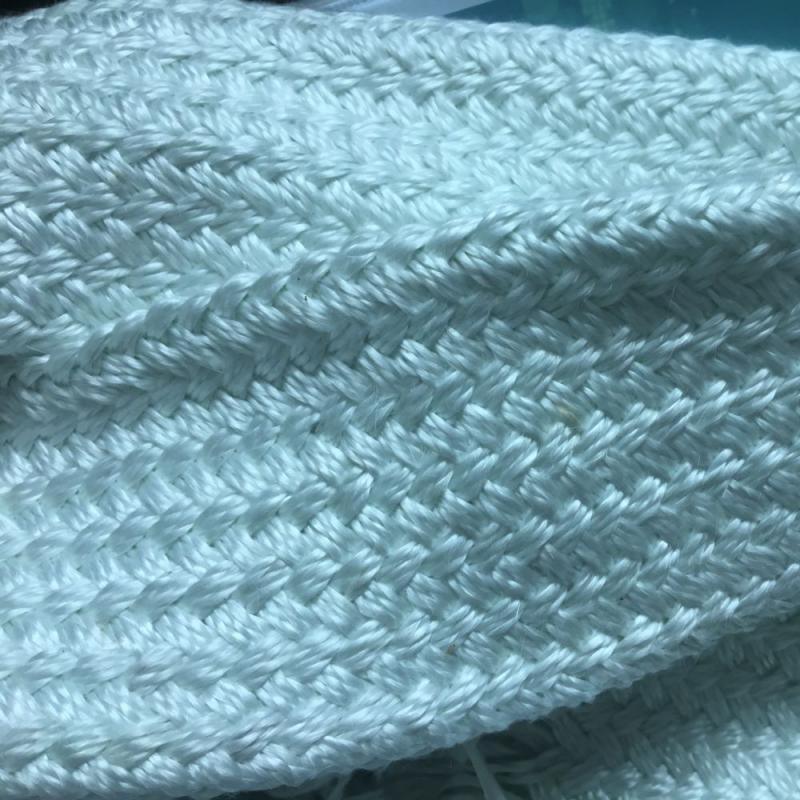
Texturized refers to the condition of the yarn. Braided refers to the way yarns are interlaced to form the sleeve. A tubular braid can be made using texturized yarn, so the two terms are not mutually exclusive.
The spelling texturised silica sleeving describes the same product category. Neither spelling identifies a particular silica percentage, wall thickness or test result.
When comparing products, ask for the yarn specification and the finished textile construction separately. A comparison headed only “braided versus texturized” leaves out information needed to explain why two samples behave differently.
What the Bulked Yarn Contributes to Insulation
Texturizing increases the volume occupied by the yarn bundle. The finished wall contains both fiber and spaces between fibers. Its heat-transfer behavior is therefore not the same as that of a solid piece of silica. [1]
Heat can travel through the solid fiber network, through the gas within the structure and by radiation. The balance depends on the material and test conditions. This is why a measured thermal conductivity belongs to a specified specimen at specified conditions, rather than to the product name alone. [2]
Additional bulk can be useful when it produces an appropriate installed insulation layer. It does not establish that every texturized sleeve will outperform every compact sleeve, or that a softer sample will always provide greater thermal resistance.
For purchasing, the useful question is: What structure remains in the assembly, and what measured result does that structure deliver?
Put the Measurement Conditions Beside the Dimensions
A thickness value without a measurement method is incomplete for a compressible textile. ASTM D1777 identifies applied pressure as an important influence on the reported thickness of textile materials. [3]
For sleeve comparison, agree how the sample is supported, whether one wall or a flattened two-wall section is measured, and what contact pressure is applied. A two-wall reading should not be listed as a single-wall thickness.
The following is a recommended purchasing record, not a claim that every measurement is required by one standard.
| Parameter | How to make the comparison useful |
|---|---|
| Inside diameter | Record the nominal size and fit on the actual component or an agreed mandrel. |
| Wall thickness | State the specimen arrangement, contact pressure and whether the reading represents one wall or two. |
| Mass per unit length | Record the mass and measured length of the same identified sample, with its measurement state defined. |
| Installed outside diameter | Check straight sections, bends and restrained areas against the available clearance. |
| Condition after heat exposure | Record dimensional change, coverage and handling condition after the agreed thermal cycle. |
Installed Thickness Matters More Than Unrestrained Loft
A loose sample and an installed sleeve are different measurement conditions. Compression under a clamp or bracket changes the local thickness; stretching and bending can also change the arrangement of the textile. Specify the installation state when comparing samples rather than relying only on how thick they feel by hand.
For a representative trial, examine the straight run, the outside of a bend and any support point that compresses the wall. Keep enough clearance for the intended assembly, but do not assume that an oversized sleeve or an uncontrolled air gap will improve insulation.
This distinction is consistent with pipe-insulation testing: ASTM C335/C335M considers fit and joints as part of the installed thermal result. A flat-material result and a pipe-mounted result are not automatically interchangeable. [4]
Mass per Meter Is a Consistency Check, Not an Insulation Rating
Mass per unit length helps describe a sleeve, but it cannot identify thermal performance by itself. Two samples with similar mass may distribute that material differently around the circumference or occupy different installed volumes.
Use mass, thickness and dimensions together to document an approved sample. Do not turn one of them into a substitute for a thermal comparison.
Separate Temperature Capability From Insulation Performance
The BSTFLEX texturized silica sleeve product page lists continuous temperature resistance up to 1,000°C (1,832°F). Confirm the applicable construction and service conditions when specifying the product. That published temperature figure is not a guaranteed temperature beneath the sleeve.
Temperature capability addresses whether the selected material can tolerate its exposure. Insulation performance addresses heat transfer through the installed system. A sleeve may remain intact while a hose, cable jacket or connector underneath becomes hotter than its own allowable limit.
Similarly, a short-duration heating result does not establish continuous-service performance. State the required operating cycle and acceptance point before choosing the test.
Read Thermal Data With the Test Conditions Attached
A useful thermal report identifies the specimen, thickness, conditioning, temperatures and measurement uncertainty. ASTM C177 addresses steady-state testing of flat specimens and recognizes that thermal results depend on the specimen and test conditions. [5]
When reviewing data for a silica insulation sleeve, establish whether the figures describe yarn, flat textile, a flattened sleeve or an installed tubular assembly. Also check whether the temperature quoted is the hot-side temperature, the mean test temperature or a product exposure limit.
Do not transfer a room-temperature conductivity value into a high-temperature calculation without supporting data. Equally, do not compare two reports as though they were equivalent when their specimen arrangements or temperature conditions differ.
Choose the Test by What Needs to Stay Cooler
A sleeve covering a hot pipe and a sleeve protecting a cable beside that pipe have different acceptance criteria. The following are suggested evaluation objectives, not published BSTFLEX test results.
| Application | Useful acceptance measure | Conditions to document |
|---|---|---|
| Sleeve over a heated pipe | Heat loss per unit length or outer-surface temperature, according to the project objective. | Pipe temperature, installed geometry, ambient conditions, orientation and end arrangement. |
| Sleeve over a component near a heat source | Temperature of the protected component during the required operating cycle. | Source temperature, separation, airflow, sleeve fit and component operating state. |
| Repeated thermal exposure | Temperature response and retained coverage after the agreed number of cycles. | Heating duration, cooling interval, restraint and inspection method. |
A laboratory can assess whether a pipe-insulation method such as ASTM C335/C335M is appropriate for the proposed specimen and objective. An external radiant-exposure trial may need a different assembly-specific protocol. Citing a test method does not mean the BSTFLEX product has been certified or tested to that method.
A Sample Comparison That Produces a Usable Answer
Consider two proposed sleeves for the same industrial tube. One appears bulkier before installation. The other occupies less space. Neither observation establishes which sample meets the thermal requirement.
Use the following comparison as a planning approach for the responsible engineer or testing laboratory.
Keep the Assembly and Exposure Comparable
Use the same component geometry, protected length, heat-source arrangement and agreed operating conditions. Identify both samples and document their dimensions before fitting. Changes to the fixture or environment should not be mistaken for improvements in the sleeve.
Record the Actual Fit
Photograph the installation and record finished outside diameter, restraint positions and local compression. Include the bends and support points that will exist in service, rather than evaluating only an unsupported straight section.
Measure the Required Outcome
For component protection, measure the protected component, not just the sleeve exterior. For pipe insulation, assess the agreed heat-loss or surface-temperature objective. Record the response over the full specified duty cycle; establish steady conditions when the objective is steady-state performance.
Inspect After Exposure
Check coverage, dimensions and handling condition after cooling. Where repeated service cycles matter, agree a repeat-exposure evaluation before approving production. Retain the configuration and acceptance results with the sample record.
The decision should be based on the installed result, not which sample looks more heavily insulated before fitting.
When a Textile Sleeve Is Not Enough
Do not use the phrase “high-temperature sleeve” as a replacement for a complete protection requirement. Where the component temperature remains unacceptable, the next evaluation may need different routing, shielding, additional insulation space or a component suitable for the environment.
Likewise, thermal performance does not by itself establish electrical dielectric performance, fluid sealing, abrasion life or molten-metal splash qualification. Specify those requirements separately rather than inferring them from the silica yarn.
For installations involving several hazards, compare the complete proposed protection system. A plain textile sleeve should not be specified as a universal substitute for coated, mechanically reinforced or application-qualified protection.
Turn the Approved Sample Into a Purchasing Specification
An instruction such as “supply the same soft silica sleeve” leaves too much open to interpretation. Use the approved sample as the reference for an agreed drawing and inspection record.
Define the product construction, inside diameter, thickness measurement method, length and relevant tolerances. Record any finish or treatment, packaging requirements and the thermal acceptance conditions. Where mass per unit length is used as an inspection parameter, define its measurement state as well.
For quotations, send the component dimensions, available installation space, required length, quantity and operating conditions. Identify which dimensions are mandatory and which can be proposed during sample development. This gives a supplier a clearer basis for recommending and pricing a construction.
Questions About Texturized Silica Sleeving
Does texturizing increase the silica content?
The term describes a change to yarn structure, not a chemical purity specification. Require composition information separately when silica content is part of the purchasing requirement.
Can texturized silica yarn be used in a braided sleeve?
Yes. Yarn texturization and sleeve braiding describe different aspects of construction. Compare the actual yarn and finished sleeve specification rather than treating the two terms as opposing material categories.
Is the sample with the greatest wall thickness always preferable?
No universal selection follows from thickness alone. Check the measurement conditions, installed fit, available clearance and the thermal result required by the assembly.
Can a fixed temperature reduction be promised from the sleeve name?
No. A temperature-reduction statement needs a defined sleeve, installation and exposure condition. Request results for a representative configuration instead of applying a single reduction figure to every installation.
Select a Texturized Silica Sleeve for Your Assembly
Review the Heat Insulation Texturized Silica Sleeve for the product specification, then send BSTFLEX your component drawing, required length, available clearance, temperature profile and quantity for quotation and sample discussion.
The silica sleeve range also includes the High Temperature Resistant Braided Silica Sleeve. Compare the actual product specifications; the names alone do not establish which construction will meet your insulation target.


 IPv6 network supported