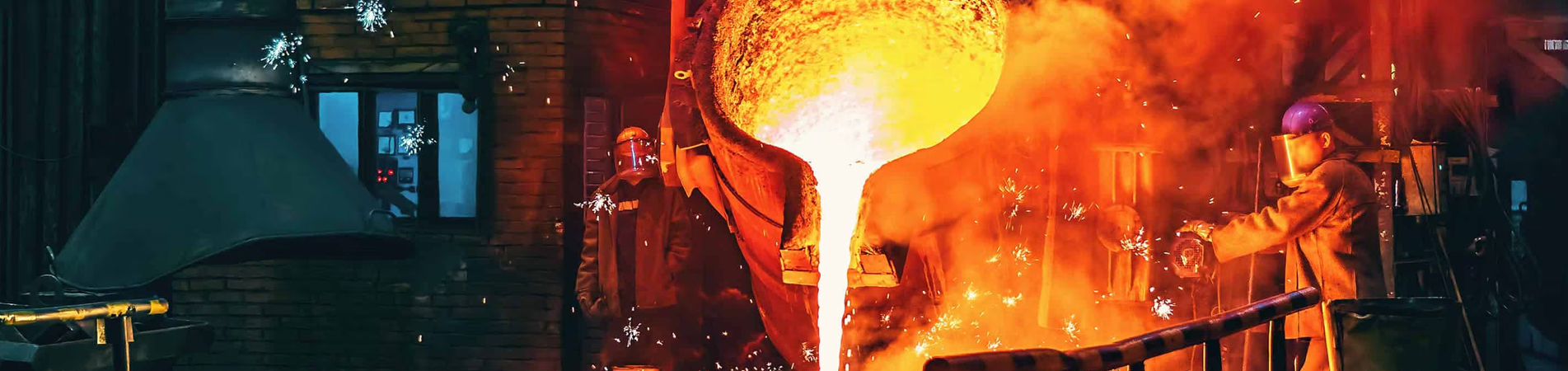
High Silica Sleeve for Extreme Temperature Protection
There is a point in thermal protection where simply adding another layer of ordinary fiberglass is no longer the best answer.
A hydraulic hose running beside a furnace casing, a cable routed past an exhaust manifold, or an instrument line crossing a high-temperature production area may remain mechanically sound while its surrounding temperature steadily moves beyond the comfortable range of conventional protective materials.
This is where a high silica sleeve becomes relevant.
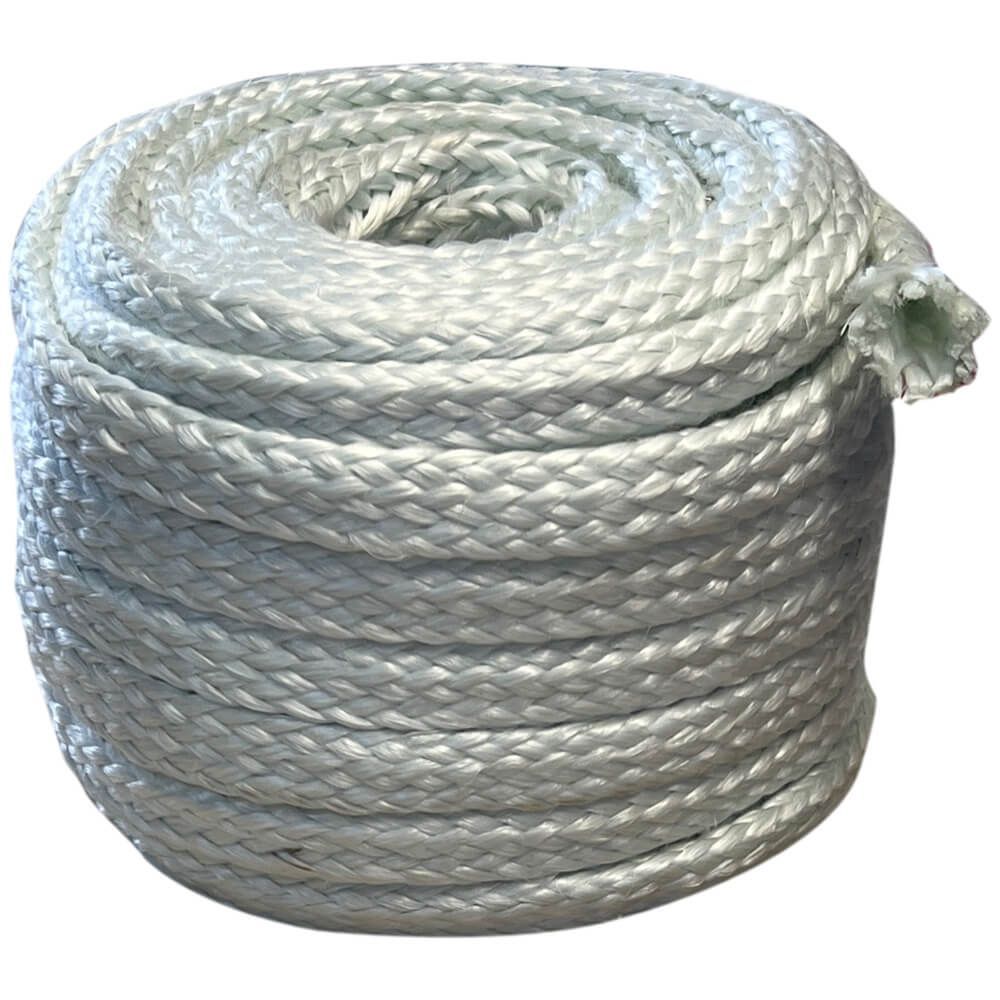
High silica sleeving is intended for applications where the protected component must remain flexible, the available space does not favor rigid insulation, and the thermal exposure is severe enough to justify a silica-rich fiber construction.
BSTFLEX manufactures silica sleeves and high-temperature silica sleeving for industrial hose, cable, wire, pipe and equipment protection.
When Does an Application Move Into High Silica Territory?
The answer is rarely determined by one temperature figure.
Two machines can have the same nominal operating temperature and still impose very different loads on a protective sleeve.
Consider these two situations.
In the first, a cable is positioned 150 mm away from a hot exhaust pipe with steady airflow passing through the compartment.
In the second, a hydraulic hose is positioned 15 mm away from a furnace access panel and remains in the same location for an entire production shift.
Both components may be exposed to heat, but the intensity, duration and mode of heat transfer are different.
A high silica fiber sleeve becomes a serious candidate when one or more of the following conditions are present:
- the heat source operates at temperatures beyond normal fiberglass applications
- radiant heat remains present for long periods
- the protected component cannot be rerouted farther from the heat source
- a flexible textile barrier is required instead of rigid insulation
- the installation includes furnaces, exhaust equipment or thermal-processing machinery
- the designer needs additional temperature margin above a conventional glass-fiber solution
- the sleeve must tolerate repeated heating and cooling cycles
Why High Silica Fiber Performs Differently From Standard Glass Fiber
The key difference is not the color of the sleeve or the fact that both materials can be woven into textile forms. It is the fiber chemistry.
Conventional fiberglass is already a capable thermal material and remains suitable for thousands of industrial applications. High silica fiber is selected when a higher silica content is required to obtain better stability under more severe thermal exposure.
After suitable processing, silica-rich fiber can still be converted into yarn and then formed into tubular protection.
This gives engineers an unusual combination:
- mineral-fiber temperature capability
- flexible installation
- small installation footprint compared with many rigid systems
- compatibility with curved hoses and cable routes
- availability in braided and texturized structures
A high silica fiber sleeve therefore occupies an important position between general-purpose flexible sleeving and much heavier refractory insulation systems.
The Temperature of the Heat Source Is Not the Temperature of the Hose
This distinction matters in nearly every high-temperature sleeve project.
If an exhaust surface is operating at 800°C, it does not automatically mean the hose positioned nearby is also exposed to 800°C.
Likewise, a furnace with a 1,000°C chamber temperature does not mean every cable outside the furnace body requires a material rated for direct continuous contact at 1,000°C.
For sleeve selection, there are several different temperatures worth separating:
| Temperature Point | What It Represents | Why It Matters |
|---|---|---|
| Heat-source temperature | Temperature of exhaust, furnace wall, pipe or process equipment | Defines the severity of the thermal source |
| Local ambient temperature | Air temperature surrounding the sleeve | Important for continuous exposure |
| Sleeve outer-surface temperature | Temperature directly seen by the textile | Relevant to material durability |
| Temperature beneath the sleeve | Temperature reaching the protected component | Critical for actual protection performance |
| Component temperature limit | Maximum acceptable temperature of hose, cable, seal or wire | Defines the real engineering target |
A correctly selected high temperature silica sleeve should be evaluated against the complete thermal path, not only against the hottest number in the equipment specification.
Radiant Heat Is Often the Hidden Problem
Many hose and cable failures occur without direct contact with a hot surface.
Radiant heat travels across open space. A turbocharger, manifold, furnace door, heated mold or glowing metal component can continuously radiate energy toward nearby equipment.
This is why a hose may show thermal aging even when an installer can clearly see an air gap between the hose and heat source.
High silica sleeving creates a thermal barrier around the component receiving that radiation.
The result depends on several variables:
- distance from the heat source
- surface temperature of the source
- exposure angle
- sleeve thickness
- air movement
- duration of exposure
- temperature limit of the component beneath the sleeve
Reducing radiant exposure can be particularly valuable around hydraulic hose covers, electrical cable jackets and polymer tubing, all of which may have considerably lower temperature limits than the surrounding metal equipment.
Continuous Heat and Short Heat Peaks Should Not Be Treated the Same Way
A common purchasing mistake is comparing sleeve materials only by the highest temperature printed on a datasheet.
Maximum temperature and continuous operating temperature serve different purposes.
A material may tolerate a severe temperature for a short event without being the preferred choice for thousands of hours at that same level.
For high silica sleeve projects, specify at least:
- normal operating temperature
- maximum expected temperature
- duration of the maximum temperature
- number of thermal cycles
- whether the sleeve cools completely between cycles
This information is more useful than simply writing "need 1000°C sleeve" on an inquiry.
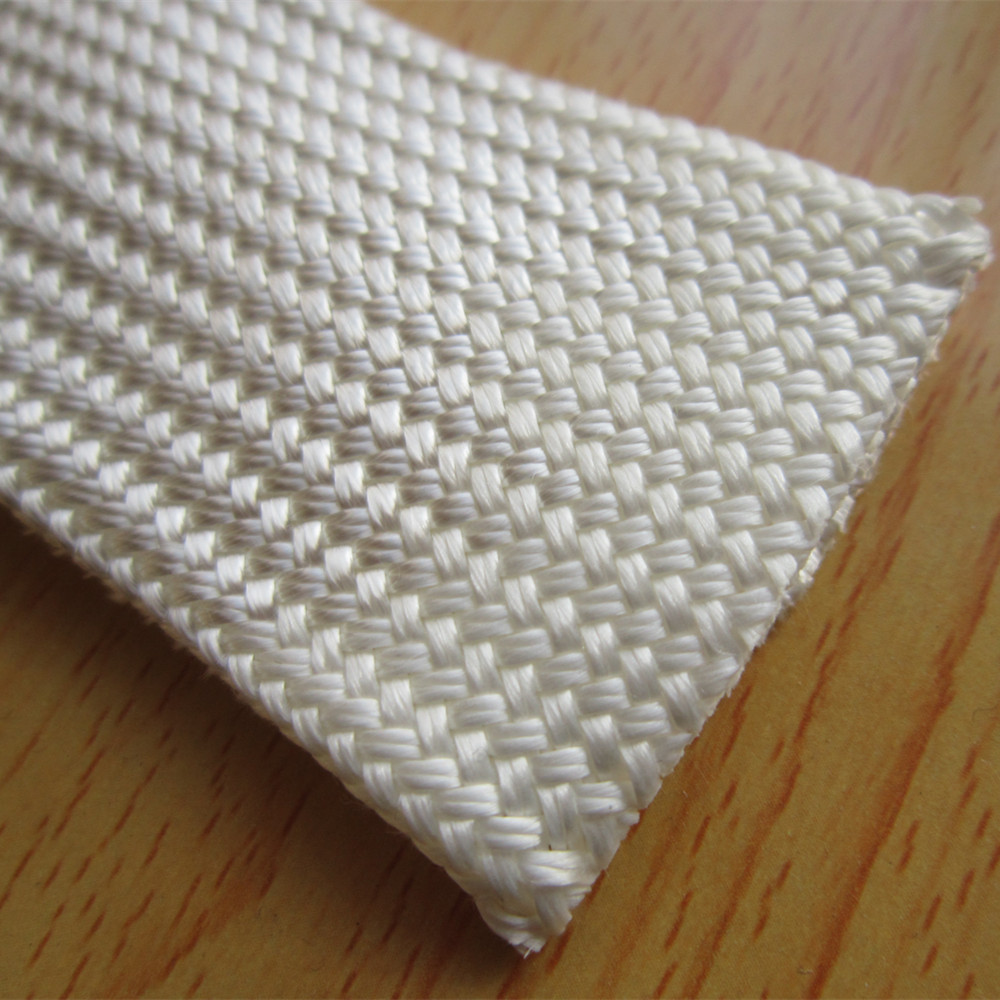
Braided High Silica Sleeve for Compact Thermal Protection
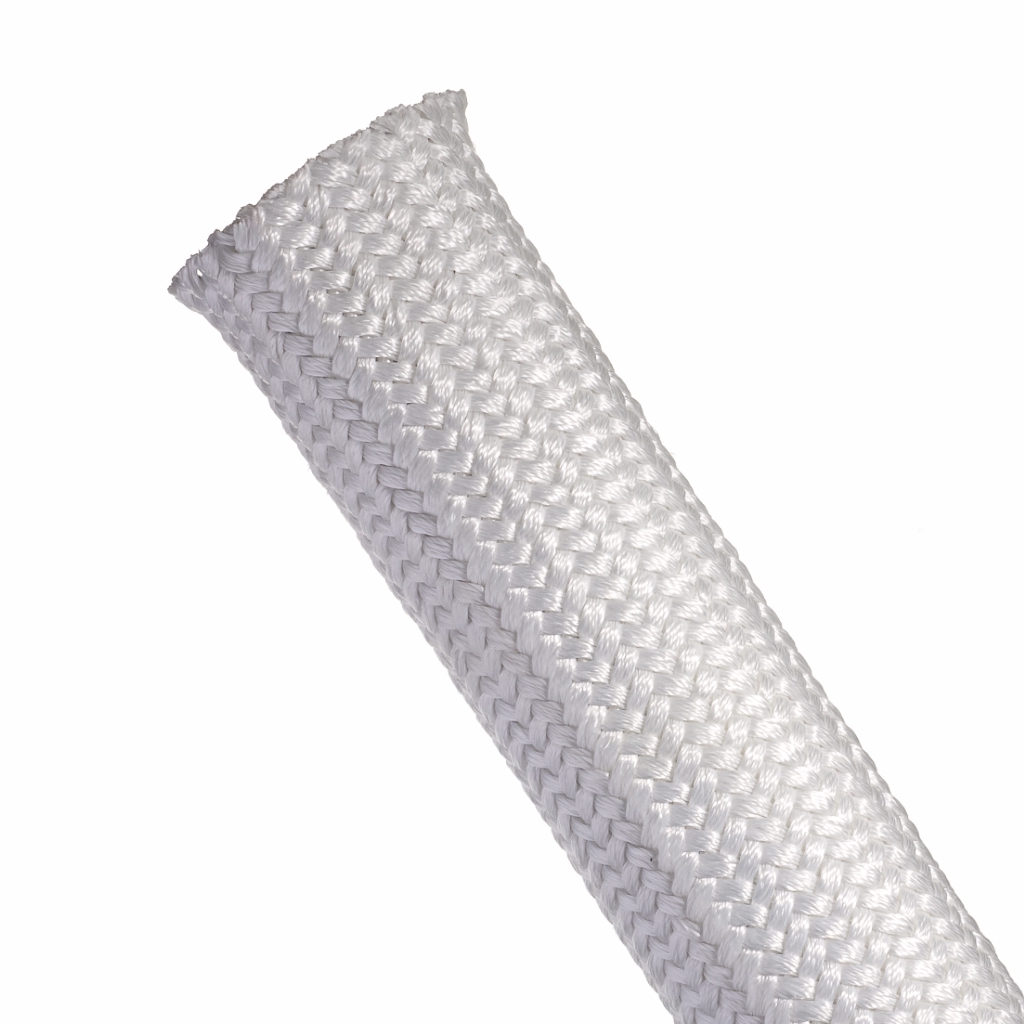
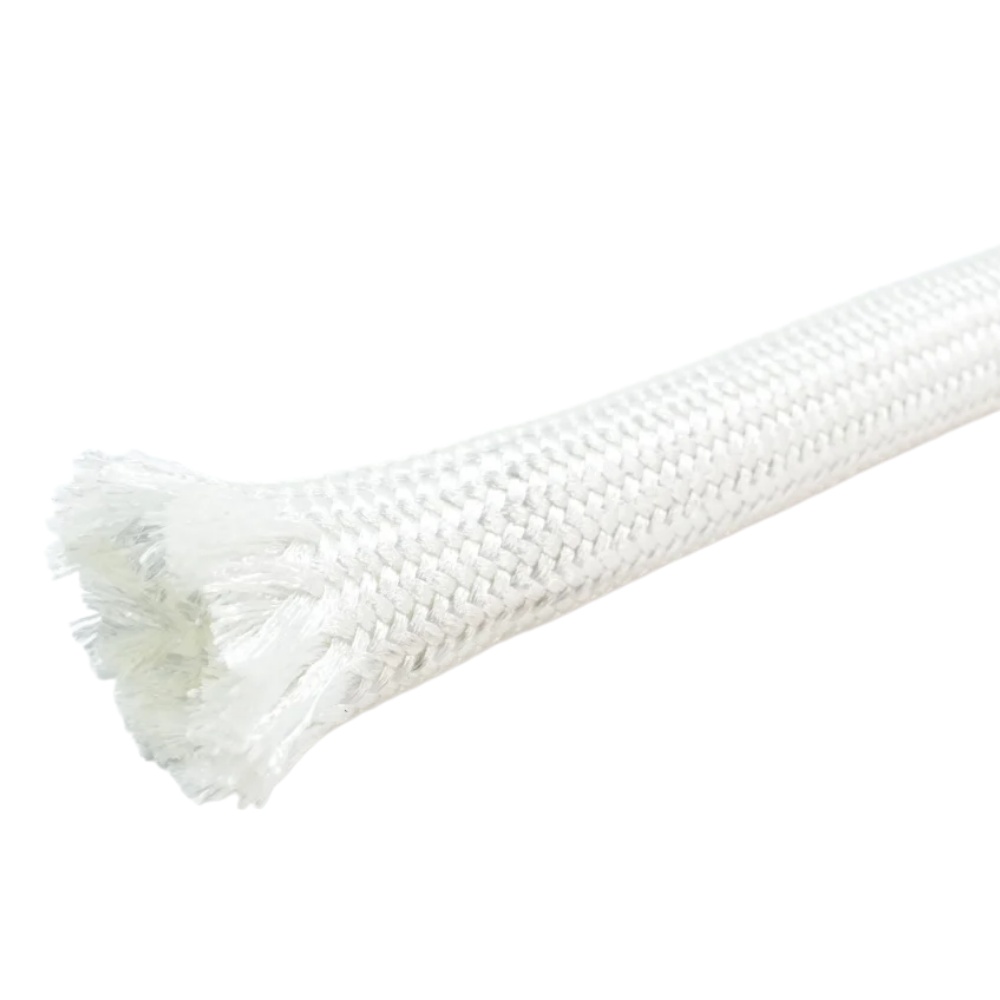
Braiding is particularly useful when the protected component moves, bends or passes through a restricted area.
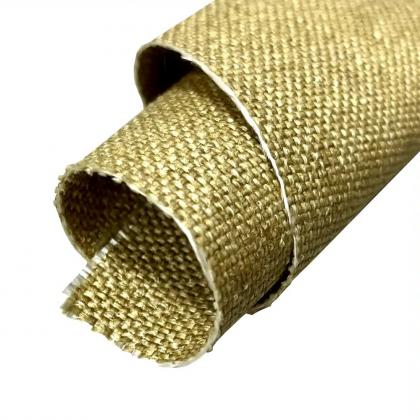
Multiple silica yarns cross around the circumference of the sleeve, forming a coherent tubular structure without turning the material into a rigid pipe.
The construction can follow curved hose and cable routes while remaining stable during handling.
BSTFLEX manufactures a High Temperature Resistant Braided Silica Sleeve for severe thermal environments.
The current specification for this particular braided construction lists a maximum temperature resistance of up to 1,200°C.
Typical candidates for braided construction include:
- hydraulic hoses
- electrical cables
- wire bundles
- sensor lines
- small process tubing
- engine components
- lines routed beside exhaust equipment
Where More Insulation Volume Is Needed
Not every installation benefits from the most compact sleeve possible.
Stationary pipework, furnace service connections and some industrial hose assemblies may benefit from a bulkier textile structure.
Texturized silica yarn introduces additional fiber volume into the sleeve wall. That structure can create more trapped air within the textile and increase the physical distance through which heat must pass.
For this type of requirement, BSTFLEX also supplies a Heat Insulation Texturized Silica Sleeve.
The decision between compact braided construction and bulkier insulation construction should be based on the installation rather than on product appearance.
High Silica Sleeve Around Hydraulic Systems
Hydraulic systems create a difficult protection problem because the hose often has to remain flexible while operating close to machinery that generates substantial heat.
Common examples include:
- steel production equipment
- die-casting machinery
- foundry equipment
- forging lines
- industrial presses
- mobile diesel machinery
- furnace service systems
- heavy manufacturing equipment
When a hydraulic line is exposed to severe radiant heat, the outer rubber cover may age faster even though hydraulic fluid temperature remains within specification.
A high silica sleeve can be installed as an external textile barrier around the hose.
For this application, engineers should check:
| Item to Check | Reason |
|---|---|
| Hose outside diameter | Determines basic sleeve size |
| Ferrule or fitting diameter | May control installation clearance |
| Minimum bend radius | Prevents an oversized wall construction from restricting movement |
| Heat-source distance | Strongly affects radiant heat load |
| Hose cover temperature limit | Defines the protection target |
| Movement and abrasion | Affects construction choice and expected service life |
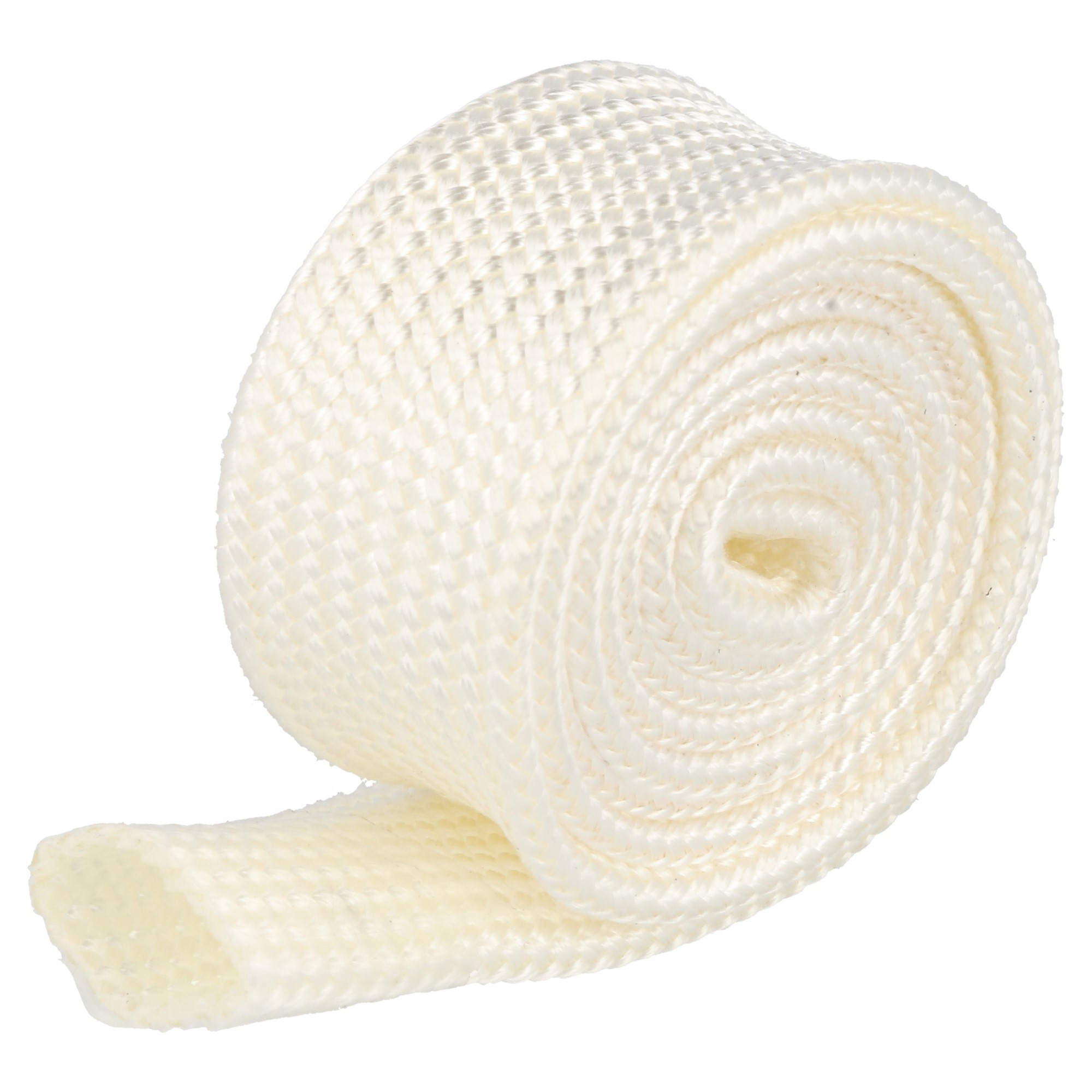
High Silica Sleeving Near Exhaust Equipment
Exhaust systems are one of the clearest examples of concentrated heat inside a limited space.
Diesel engines, turbochargers, exhaust manifolds, generator sets and industrial engines may place wiring, hoses and instrumentation only a short distance from hot exhaust components.
A high silica sleeve for exhaust-adjacent protection can be installed around the sensitive component rather than around the exhaust itself.
This distinction changes the design objective.
When the sleeve surrounds a cable or hose near an exhaust:
The objective is protection.
When insulation surrounds the exhaust pipe directly:
The objective is heat containment.
The same material family may appear in both systems, but the required wall structure, installation method and thermal calculation can be different.
Furnace Applications: Look Outside the Chamber
High silica sleeve is often useful around furnace equipment without ever entering the hottest part of the furnace.
External systems still face demanding temperatures around:
- burner assemblies
- furnace doors
- inspection ports
- thermocouple connections
- electrical service cables
- hydraulic and pneumatic lines
- process piping
These components may be exposed to long-duration heat shift after shift.
For such projects, the actual measured temperature at the sleeve location is normally more valuable than the furnace's advertised chamber temperature.
Foundry and Casting Equipment
Foundry environments combine radiant heat, hot equipment, mechanical movement and the possibility of molten-metal exposure.
These conditions should not be reduced to one generic "high-temperature" requirement.
A high silica fiber sleeve may be appropriate for protecting hoses and cables from furnace radiation and nearby hot surfaces.
However, if direct molten-metal splash is expected, the project needs a separate hazard assessment.
The temperature resistance of the fiber alone does not prove that every sleeve construction will safely shed molten aluminum, iron or steel.
For splash exposure, information should include:
- metal type
- molten-metal temperature
- expected splash quantity
- angle of impact
- duration of contact
- required surface coating or treatment
This distinction prevents high-temperature resistance from being confused with molten-metal performance.
Steel Mill Applications
Hydraulic hose and electrical cable often have to run through hot zones in steel processing plants.
Potential areas include:
- continuous casting equipment
- rolling mills
- reheating furnace areas
- hot strip processing
- ladle equipment
- material handling systems
In these environments, temperature is often only one part of the problem.
A sleeve may also encounter scale, abrasion, vibration and mechanical contact. The complete protective system should therefore be selected around the real location rather than using high silica fiber as a universal solution.
High Silica Sleeve for Electrical Cable and Instrumentation
Electrical systems frequently contain materials whose thermal limits are much lower than those of nearby metal equipment.
Insulation compounds, connectors and sensor interfaces may be the weakest points.
A high silica sleeve can provide an external thermal barrier around:
- power cables
- sensor wiring
- thermocouple leads
- control cables
- engine wiring harnesses
- furnace instrumentation
- generator wiring
It is important to separate two specifications.
Thermal insulation: reducing heat reaching the cable.
Electrical insulation: preventing electrical conduction or providing a defined dielectric rating.
A silica sleeve selected for heat protection should not automatically be assigned an electrical dielectric rating unless that performance is independently specified and tested.
Pipe and Tube Insulation With High Silica Fiber
Small-diameter process piping can be awkward to insulate with conventional removable blankets or fabricated metal jackets.
Flexible silica sleeving can offer a practical alternative where the geometry permits tubular installation.
Typical examples include:
- hot gas lines
- generator exhaust connections
- industrial engine tubing
- heated process pipes
- laboratory furnace connections
- high-temperature instrumentation tubing
Direct pipe insulation should be evaluated according to heat loss and desired outer-surface temperature, not only according to whether the silica fiber survives the pipe temperature.
How Much Temperature Margin Should Be Allowed?
Running any thermal protection material continuously at the edge of its maximum published capability is rarely the preferred engineering approach.
Real equipment does not remain perfectly constant.
Temperature spikes occur. Airflow changes. Production rates increase. Exhaust regeneration events raise local heat. Deposits accumulate. Hoses move closer to hot surfaces. Maintenance changes routing.
A practical design therefore includes thermal margin.
The amount of margin depends on:
- severity of failure if protection is lost
- accuracy of available temperature data
- thermal cycling frequency
- continuous versus intermittent exposure
- airflow stability
- distance from the heat source
- expected service life
A critical hydraulic line beside a furnace deserves a more conservative approach than a non-critical cable exposed only during occasional equipment warm-up.
High Silica Sleeve vs Adding More Fiberglass Layers
When temperatures rise, it can be tempting to keep increasing the thickness of an existing fiberglass solution.
That approach has practical limits.
| Engineering Question | Additional Fiberglass | High Silica Sleeve |
|---|---|---|
| Need more insulation thickness? | Can help | Can help depending on construction |
| Fiber temperature capability already becoming limiting? | Additional thickness does not change base fiber chemistry | Higher-silica fiber may provide greater thermal margin |
| Limited installation diameter? | More layers increase bulk | Can provide another material option without simply stacking layers |
| Need flexible hose protection? | Possible | Well suited in braided constructions |
| Extreme industrial thermal environment? | Application dependent | Often considered when conventional glass approaches its limit |
The correct decision is not "silica is always better." It is whether moving to a different fiber system solves the actual thermal limitation more effectively than simply adding material thickness.
High Silica Does Not Solve Every Hazard
A high temperature rating can create a false sense that one sleeve can handle every severe industrial environment.
That is not the case.
High silica fiber does not automatically provide:
- oil sealing
- waterproofing
- chemical resistance to every fluid
- high abrasion resistance against sharp metal edges
- electrical dielectric certification
- molten-metal splash resistance
- flame resistance for every specified test method
If the application includes several hazards at once, a different coating, outer layer or sleeve system may be required.
The best high-temperature protection system is often selected by identifying the dominant failure mechanism first.
Braided High Silica Sleeve or Texturized Silica Sleeve?
| Project Condition | Preferred Direction to Evaluate |
|---|---|
| Flexible hydraulic hose | Braided silica sleeve |
| Tight engine compartment | Compact braided construction |
| Electrical cable routing | Braided silica fiber sleeve |
| Stationary hot pipe | Texturized or heavier insulation construction |
| Need increased textile insulation volume | Texturized silica sleeve |
| Frequent bending | Evaluate braided construction |
| Long-duration stationary thermal insulation | Evaluate wall thickness and texturized construction |
These are selection directions, not fixed rules. Diameter, temperature and installation geometry can change the preferred solution.
Information Needed for an Extreme-Temperature Sleeve Project
A useful technical inquiry can often be summarized on one page.
For BSTFLEX to evaluate a high silica sleeve application, provide the following information whenever available:
- Protected component: hose, cable, wire, pipe or another assembly.
- Outside diameter: including the largest fitting or connector the sleeve must pass over.
- Heat source: exhaust, furnace, engine, heated pipe, molten process or other equipment.
- Heat-source temperature: normal and peak.
- Distance from heat source: particularly important for radiant heat.
- Local ambient temperature: where known.
- Maximum allowable component temperature: if specified by the hose, cable or equipment manufacturer.
- Exposure duration: continuous, cyclic or short peak.
- Movement: stationary, vibrating, flexing or repeatedly bending.
- Other hazards: oil, abrasion, molten splash, weather or chemical exposure.
- Required length and quantity.
Photographs, drawings and actual temperature measurements can make product selection considerably more accurate.
BSTFLEX High Silica Sleeve Options
BSTFLEX supplies silica sleeving for industrial thermal protection through different textile constructions.
High Temperature Resistant Braided Silica Sleeve
Designed for flexible thermal protection where a mechanically stable tubular braid is preferred. Applications include hoses, cables, wiring and equipment positioned close to severe heat sources.
View Braided High Silica Sleeve
Heat Insulation Texturized Silica Sleeve
Designed for applications where a bulkier silica textile structure and increased insulation volume are desirable around pipes, hoses and industrial equipment.
View Texturized Silica Insulation Sleeve
For the complete product family, visit the Silica Sleeve category.
Questions Engineers Frequently Ask About High Silica Sleeve
What is a high silica sleeve?
A high silica sleeve is a flexible tubular thermal protection product manufactured from silica-rich fiber yarn. It is generally selected when hoses, cables, wires or pipes require protection in thermal conditions more severe than those normally handled by conventional fiberglass sleeving.
Where is high silica sleeving normally used?
Typical locations include exhaust systems, furnaces, foundries, steel plants, engines, heat-treatment equipment, industrial ovens and machinery containing high-temperature hoses, cables or piping.
Can high silica sleeve be installed over a hydraulic hose?
Yes. Braided silica sleeves can be used as external thermal protection for hydraulic hoses exposed to radiant or ambient heat. Hose diameter, fittings, bend radius, abrasion and the actual thermal environment should be reviewed before selection.
Can high silica sleeve be used around exhaust components?
Yes. It can protect cables, hoses and wiring positioned near exhaust pipes, manifolds and turbochargers. Direct insulation of an exhaust pipe is a different application and should be evaluated according to pipe temperature, diameter and required heat containment.
Does high silica sleeve work against radiant heat?
Silica sleeving can form part of a radiant-heat protection system by creating a high-temperature textile barrier between the heat source and the protected component. Actual performance depends on distance, sleeve construction, exposure time, airflow and source temperature.
Is maximum temperature the same as continuous temperature?
No. Maximum or peak temperature and continuous operating temperature describe different exposure conditions. Product selection should consider both values and the duration of each exposure.
Is high silica sleeve always better than fiberglass sleeve?
No. Standard fiberglass remains a cost-effective material where its thermal capability is sufficient. High silica fiber is generally considered when greater temperature capability or additional thermal margin is required.
Which is better, braided or texturized silica sleeve?
Braided construction is often preferred where compactness, flexibility and dimensional stability are important. Texturized construction can be considered when greater textile volume and thermal insulation are priorities.
What size high silica sleeve should I order?
Use the largest outside dimension the sleeve must pass over, not just the nominal hose or cable size. Fittings, connectors and installation method must also be considered.
Can BSTFLEX produce custom silica sleeving?
Yes. BSTFLEX can evaluate customized inside diameter, length, construction, packaging and other OEM requirements according to the application.
Specify the Heat Problem Before Specifying the Sleeve
For severe-temperature projects, the most useful RFQ contains more than a sleeve diameter and a temperature number.
Send BSTFLEX the component dimensions, heat-source temperature, distance from the heat source, required component temperature limit, operating cycle and any mechanical or environmental hazards. Our team can then evaluate whether a braided high silica sleeve, texturized silica insulation sleeve or another thermal protection construction is more appropriate.


 IPv6 network supported