Braided Silica Sleeve for Hose, Cable and Wire Protection
A braided thermal sleeve has to do more than survive heat. It also has to fit over the component, follow bends, pass over fittings where required, remain stable during installation and provide enough textile thickness to reduce the thermal load reaching the hose, cable or wire underneath.
Those practical details explain why braided silica sleeve is widely used for high-temperature protection in installations where rigid insulation cannot follow the routing of the component.
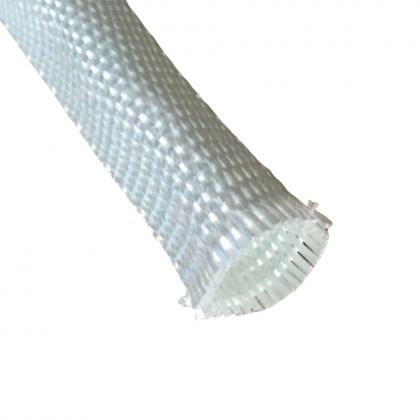
BSTFLEX manufactures High Temperature Resistant Braided Silica Sleeve for hose, cable, wire and other components exposed to severe thermal environments. The current product specification lists maximum temperature resistance up to 1,200°C for this particular braided construction.
The Braid Structure Controls More Than Appearance
At first glance, two silica sleeves may look almost identical. Both may be white, flexible and tubular. Their behavior during installation can still be very different.
The difference often begins with the braid itself.
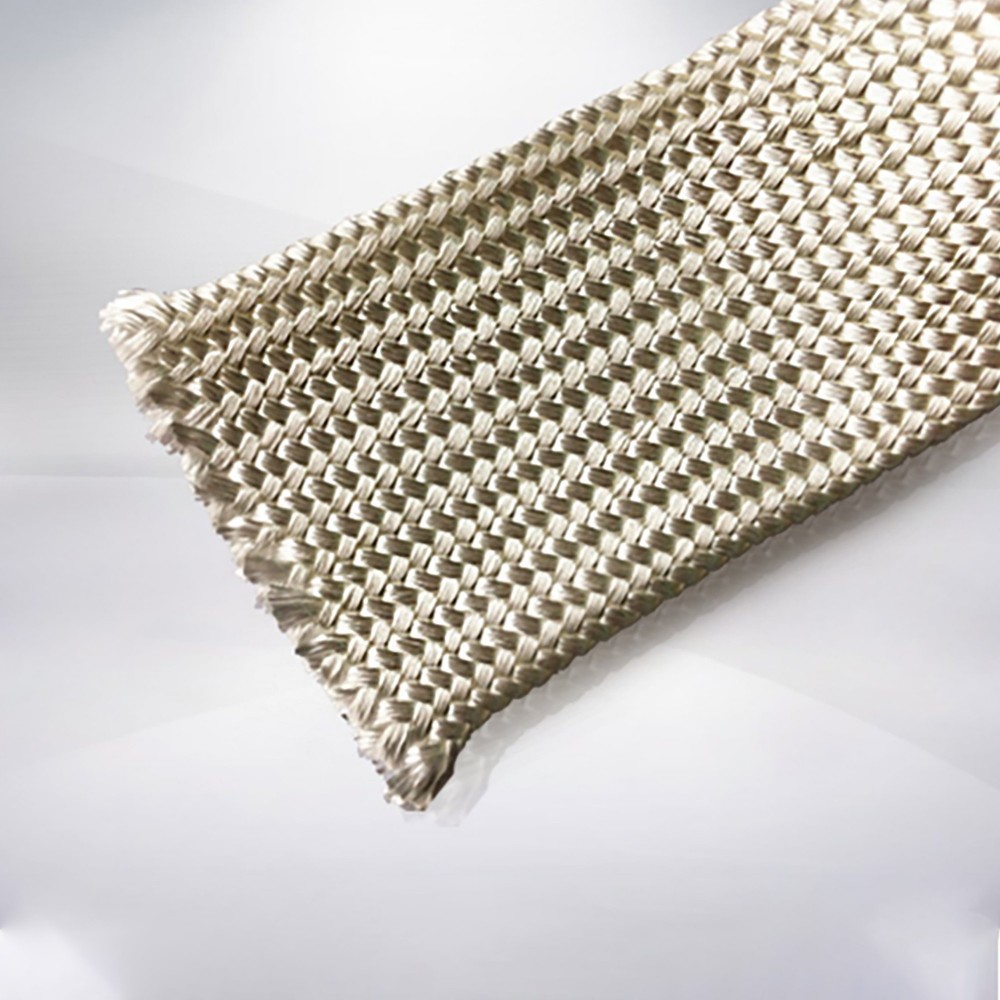
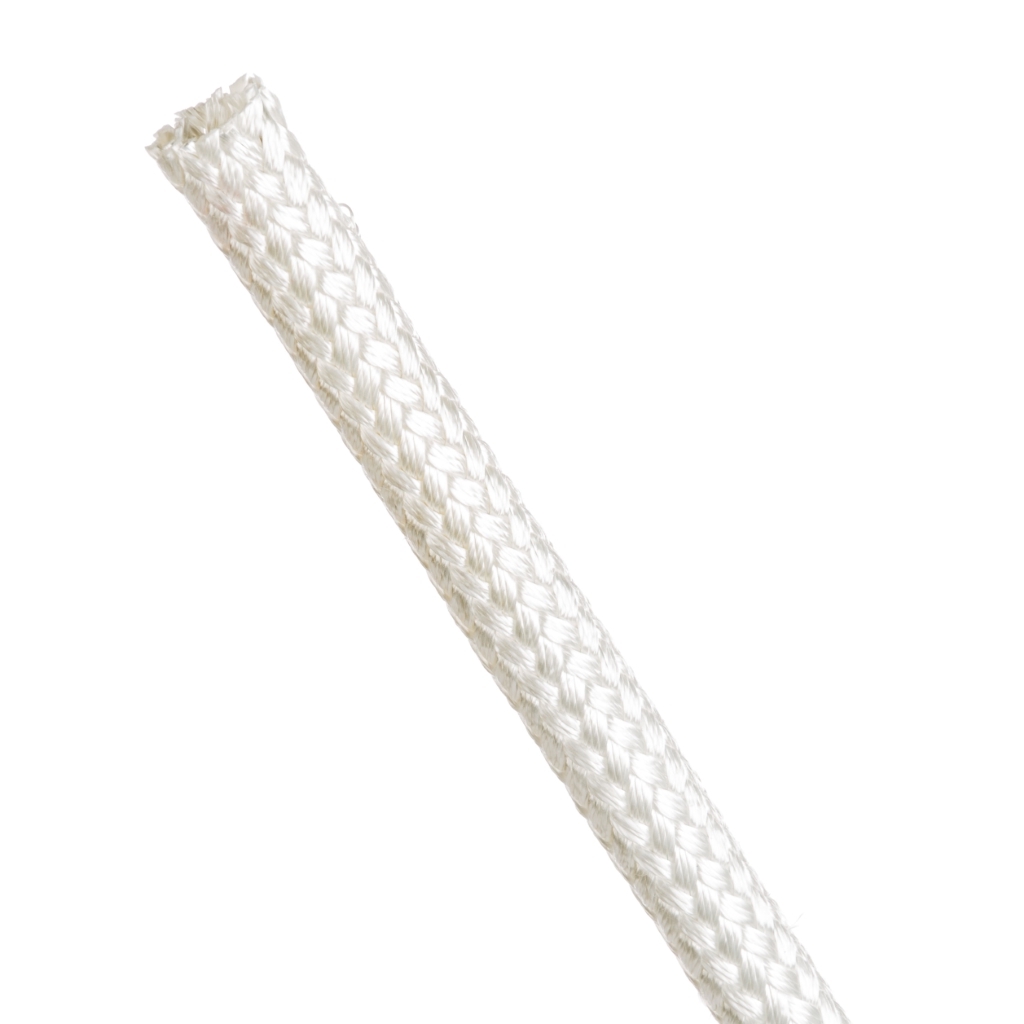
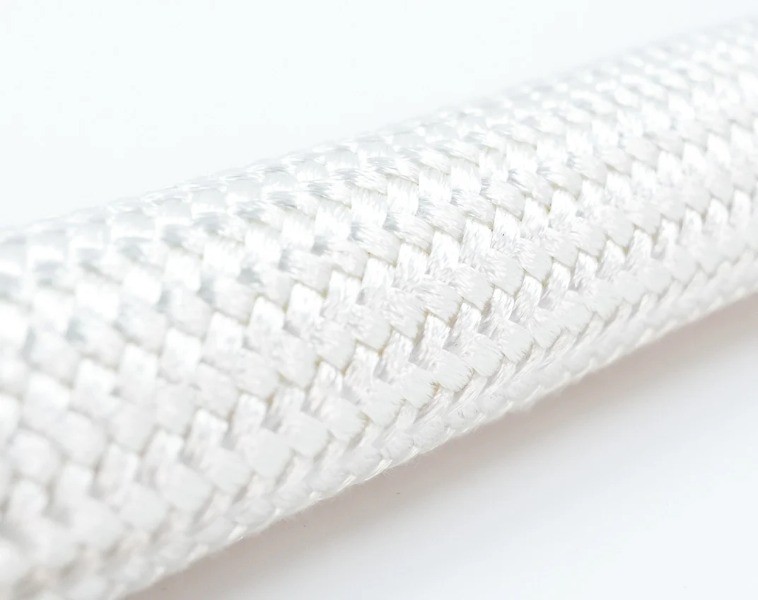
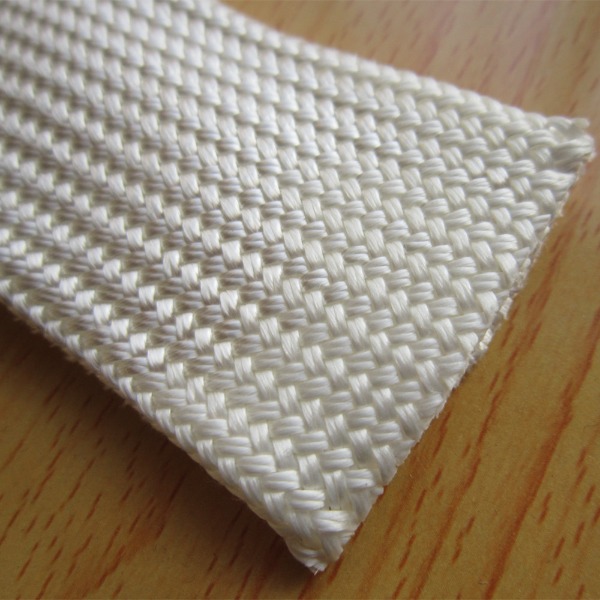
A braided sleeve is produced by interlacing multiple silica yarn carriers around a tubular axis. The yarns cross each other at an angle instead of running only along the length of the sleeve.
This geometry affects:
- radial expansion
- axial contraction
- sleeve wall density
- flexibility around bends
- dimensional stability
- surface coverage
- resistance to yarn displacement during handling
Changing yarn size, carrier count, braid angle or production tension can change how the finished silica braided sleeve behaves even when the nominal inside diameter is the same.
For an OEM application, this matters because the best construction for a straight stationary pipe may not be the best construction for a hydraulic hose that repeatedly bends during operation.
Radial Flexibility Is One of the Main Advantages of Braiding
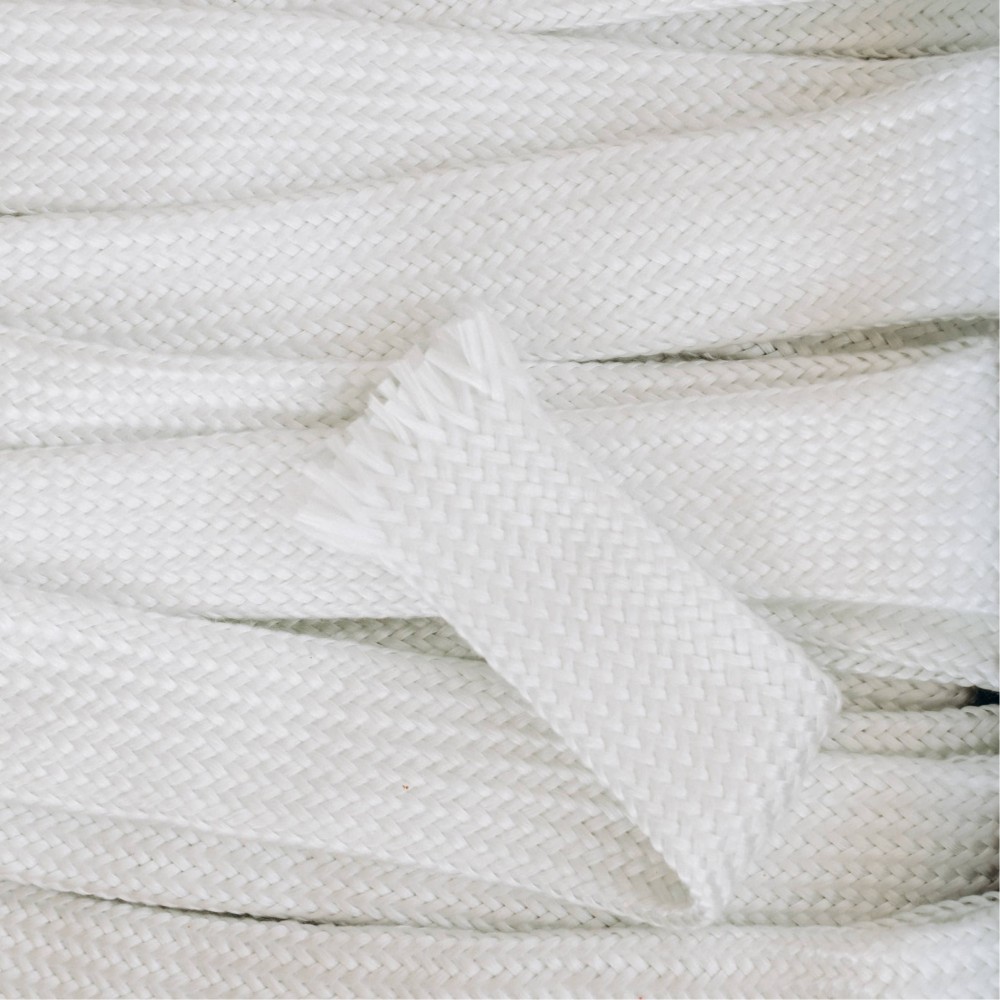
A tubular braid does not behave like a rigid pipe.
When its diameter expands, its length and braid angle change. When the sleeve is stretched longitudinally, the diameter can decrease.
This characteristic allows a braided silica fiber sleeve to accommodate a limited range of component diameters and to follow curved routing more naturally than a rigid insulation tube.
That radial flexibility becomes useful when the sleeve has to fit around:
- hydraulic hoses
- rubber fluid lines
- electrical cable bundles
- wiring harnesses
- sensor cables
- small-diameter pipe
- irregular assemblies
However, radial expansion has limits. A sleeve should not be selected several sizes too small with the assumption that braiding will compensate indefinitely.
Excessive expansion can open the braid, reduce textile coverage and change the effective wall structure.
Hose Fit Starts With Outside Diameter, Not Nominal Hose Size
One of the most common specification errors is ordering sleeve by the nominal bore of the hose.
A hydraulic hose described as 1 inch does not have a 1 inch outside diameter. Depending on hose construction, reinforcement and cover thickness, the actual outside diameter may be substantially larger.
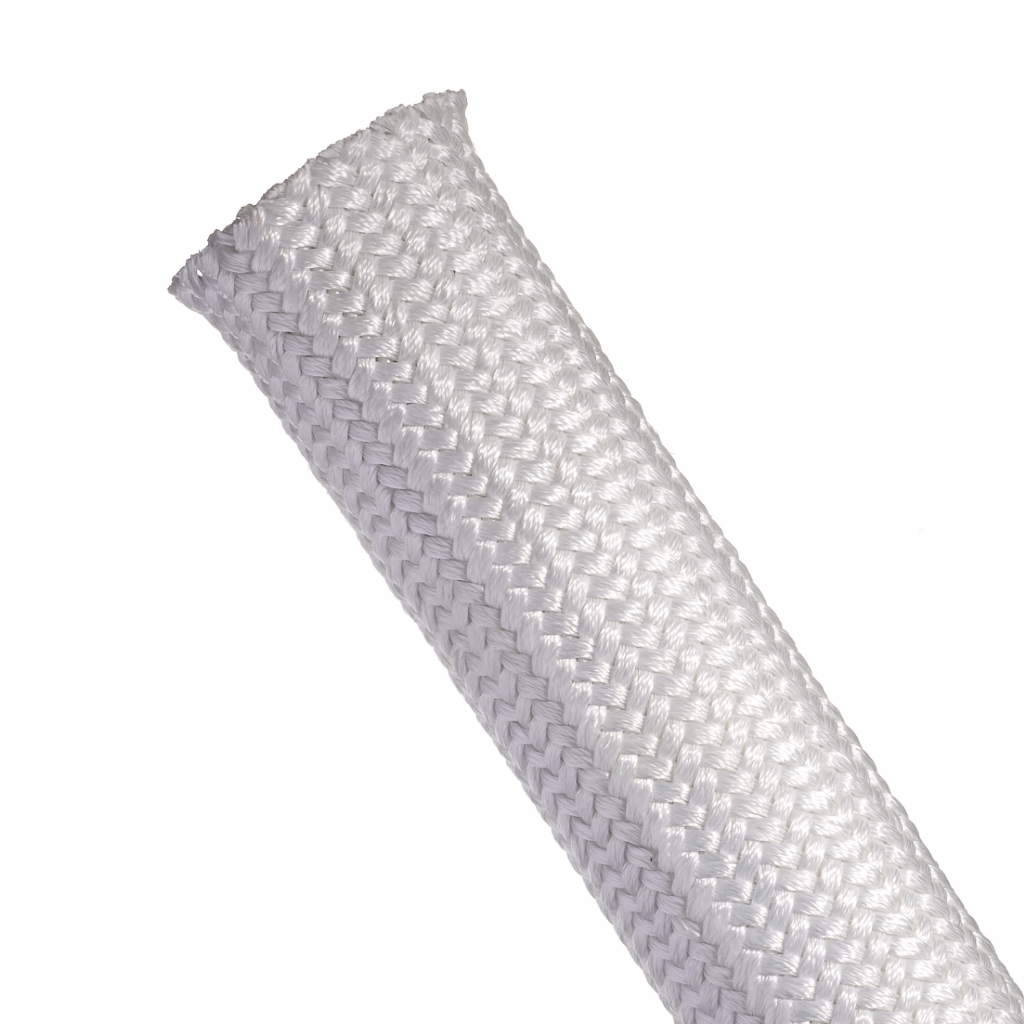
The correct starting point for a braided silica sleeve for hose protection is therefore the measured hose outside diameter.
Before ordering, record:
| Dimension | Why It Matters |
|---|---|
| Hose outside diameter | Determines the basic sleeve bore |
| Ferrule outside diameter | May be larger than the hose itself |
| Fitting geometry | Determines whether the sleeve can be installed after hose assembly |
| Hose bend radius | Helps determine how much flexibility the sleeve must retain |
| Available clearance | Limits allowable sleeve wall thickness and finished outside diameter |
If the sleeve is installed before the hose fittings are crimped, the hose body diameter may control the size.
If the sleeve must be installed over a finished hose assembly, the largest fitting or ferrule may control the size instead.
Fitting Installation Can Change the Required Sleeve Diameter Completely
Consider a hose body measuring 25 mm outside diameter with a crimped ferrule measuring 38 mm.
If the braided sleeve is fitted before the ferrule is installed, a sleeve selected around the hose diameter may be appropriate.
If maintenance personnel need to slide the sleeve over the finished assembly, the sleeve must either expand sufficiently over the 38 mm ferrule or be supplied in another construction or installation format.
This is why the question:
"What hose diameter do you have?"
is often not enough.
A more useful question is:
"What is the largest diameter the sleeve must pass over during installation?"
For custom hose assemblies, BSTFLEX recommends providing both hose OD and maximum fitting OD when requesting a high silica braided sleeve.
A Sleeve That Is Too Tight Can Create Its Own Problems
It may seem logical that a tight-fitting sleeve will provide better protection because there is no unnecessary space around the hose.
In practice, excessive tightness can be undesirable.
A heavily expanded braid can:
- open gaps between yarns
- reduce effective textile density
- make installation difficult
- increase friction against the hose cover
- restrict bending
- place unnecessary stress on the sleeve
A correctly selected sleeve should fit securely without being forced into its maximum expansion range.
The amount of clearance depends on the braid design and installation method rather than on one universal percentage.
An Oversized Sleeve Is Not Automatically Better Either
Moving too far in the opposite direction creates another set of problems.
An excessively large sleeve may:
- move along the hose
- collapse at bends
- interfere with nearby components
- require additional termination hardware
- create inconsistent air gaps
For moving hose assemblies, excessive looseness can also allow the sleeve to rub against fittings, brackets or neighboring components.
The target is therefore not simply "large enough to fit." It is a diameter that allows practical installation while maintaining the intended braid geometry.
Wall Thickness Has to Match the Thermal Problem
Inside diameter determines whether the sleeve fits. Wall construction influences what happens after it is installed.
Two silica fiber sleeves with the same nominal bore can have different yarn counts, braid densities and wall thicknesses.
A heavier wall can introduce more silica fiber between the heat source and the protected component, but that does not mean the thickest option is always preferred.
Increasing wall thickness also increases:
- outside diameter
- weight
- material consumption
- minimum installation clearance
- stiffness around tight bends
A stationary cable next to a furnace opening may tolerate a relatively bulky insulation structure.
A hydraulic hose moving through a confined engine compartment may need a much more compact braid.
Braid Density Matters as Much as Wall Thickness
A sleeve can appear thick but still have an open textile structure.
Braid density describes how closely the yarns cover the circumference of the sleeve.
Higher coverage generally creates a more continuous textile barrier, while a more open braid can offer greater expansion and flexibility.
The ideal balance depends on the application.
| Requirement | Braid Direction to Consider |
|---|---|
| Maximum flexibility | More compliant braid geometry |
| Compact cable protection | Dense, controlled braid |
| Large fitting pass-over | Construction with sufficient radial expansion |
| Stationary severe heat exposure | Higher coverage and adequate wall thickness |
| Repeated hose movement | Balance coverage with flexibility |
Braided Silica Sleeve for Hydraulic Hose Routing
Hydraulic hose installations create a combination of dimensional and mechanical demands that are different from stationary cable protection.
The hose may:
- bend during machine operation
- vibrate
- move with a cylinder or articulated arm
- pass through clamps and supports
- run close to exhaust or furnace surfaces
- experience abrasion in addition to heat
A braided silica sleeve can follow this movement more naturally than rigid insulation.
But the sleeve must not reduce the hose bend radius below the value specified by the hose manufacturer.
On moving machinery, installation length should also account for hose movement. A sleeve cut exactly to the straight-line distance between two points may become too short when the hose changes position.
Where Should the Sleeve End on a Hydraulic Hose?
Termination is often overlooked until installation begins.
In many assemblies, the sleeve should extend far enough to protect the heat-exposed portion of the hose while avoiding interference with:
- swivel fittings
- wrench flats
- inspection points
- hose identification marks
- moving joints
If heat exposure continues close to the fitting, the thermal behavior of the metal coupling also needs attention. A protected hose body can still receive heat through a hot metallic fitting by conduction.
For critical assemblies, the complete hose-and-fitting system should therefore be reviewed rather than treating the flexible hose section in isolation.
Cable Bundles Behave Differently From Hydraulic Hoses
A cable bundle may appear simpler because it does not contain pressurized fluid, but cable installations introduce their own sizing issues.
Cables can vary in:
- bundle diameter
- connector size
- branch points
- minimum bend radius
- number of conductors
- outer jacket material
For a braided silica sleeve for cable protection, the nominal bundle diameter is usually only the first measurement.
If the sleeve is installed before connectors are fitted, the cable bundle can often use a relatively close-fitting sleeve.
If the sleeve must be serviced or replaced without removing connectors, connector size becomes important.
Cable Routing Through Hot Zones
In industrial machinery, cable rarely runs in a perfectly straight line.
A typical route may leave a control cabinet, pass around a machine frame, cross near an exhaust or furnace wall, bend around a bracket and terminate at a sensor.
The silica sleeve must remain flexible enough to follow this path without bunching at the inside radius of each bend.
This is one reason braided construction is useful for:
- thermocouple leads
- sensor cables
- industrial control wiring
- generator wiring
- engine harnesses
- furnace instrumentation
A compact braid can also be advantageous where several protected cables share the same cable tray or conduit space.
Wire Harness Protection Requires Attention to Branch Points
A wiring harness often divides into multiple branches.
A single tubular sleeve cannot always follow every branch without interruption.
Common approaches include:
- using separate sleeve sections for each branch
- terminating the main sleeve before the branch
- using different diameters along the harness
- installing the sleeve during harness assembly before connectors are added
The best method depends on production sequence.
For OEM wire-harness projects, providing a drawing of the harness is often more useful than providing only total cable diameter.
Silica Fiber Sleeve Near Exhaust Components
Exhaust areas place concentrated radiant heat close to hoses and electrical systems.
Typical installations include:
- wiring beside exhaust manifolds
- sensor cables near turbochargers
- hydraulic hoses close to diesel exhaust pipe
- fluid lines routed near downpipes
- engine wiring near after-treatment systems
In these cases, the braided silica sleeve is normally installed around the component requiring protection.
The sleeve diameter should be selected around that hose or cable, not around the exhaust pipe.
If the objective is instead to insulate the exhaust pipe itself, the thermal design changes. Pipe temperature, insulation thickness, heat containment and desired external surface temperature become more important.
Furnace Cable and Hose Protection
Furnace installations often contain service lines around doors, burners, actuators and instrumentation.
A braided silica fiber sleeve can protect flexible components that need to remain close to these areas while still allowing maintenance access.
Useful applications include:
- burner control wiring
- thermocouple cable
- hydraulic hose
- pneumatic lines
- sensor wiring
- small process tubing
The chamber temperature itself should not be used as the only sleeve specification.
The important temperature is the actual thermal exposure at the hose or cable location.
Foundry and Steel Processing Applications
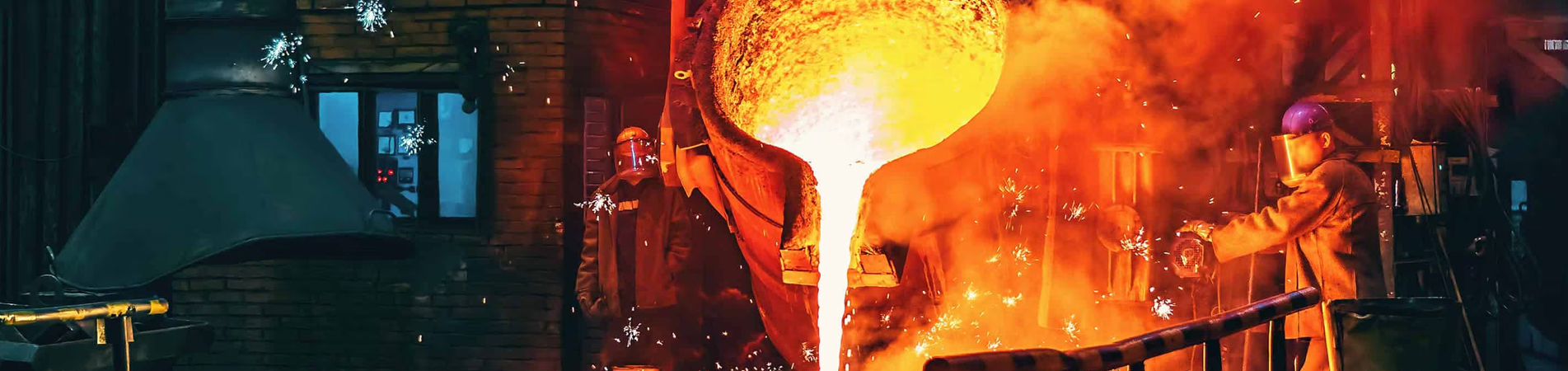
Foundries and steel plants place hoses and cables in environments that combine high radiant heat with mechanical contamination.
A high silica braided sleeve can be used where heat is the principal concern, especially around:
- casting machinery
- furnace service lines
- rolling equipment
- hydraulic systems
- electrical instrumentation
- hot metal handling equipment
These environments also raise another question: molten metal.
High-temperature fiber resistance and molten-metal splash performance are not the same property.
If direct splash is expected, the product should be evaluated for the specific molten metal, contact time and required surface treatment rather than selected solely from the silica fiber temperature capability.
Automotive and Engine Compartment Routing
Automotive thermal management creates a different sizing challenge because space is limited.
Components may run only millimeters apart around:
- turbochargers
- exhaust manifolds
- downpipes
- EGR systems
- engine blocks
- high-temperature sensors
A compact braided silica sleeve can protect individual hoses or wires without requiring the large installation volume of a removable blanket or fabricated shield.
The sleeve still has to coexist with clamps, brackets, connectors and neighboring lines.
For automotive projects, finished sleeve outside diameter therefore matters almost as much as the inside diameter.
How Much Clearance Is Needed Around the Finished Sleeve?
This question is particularly important in confined machinery.
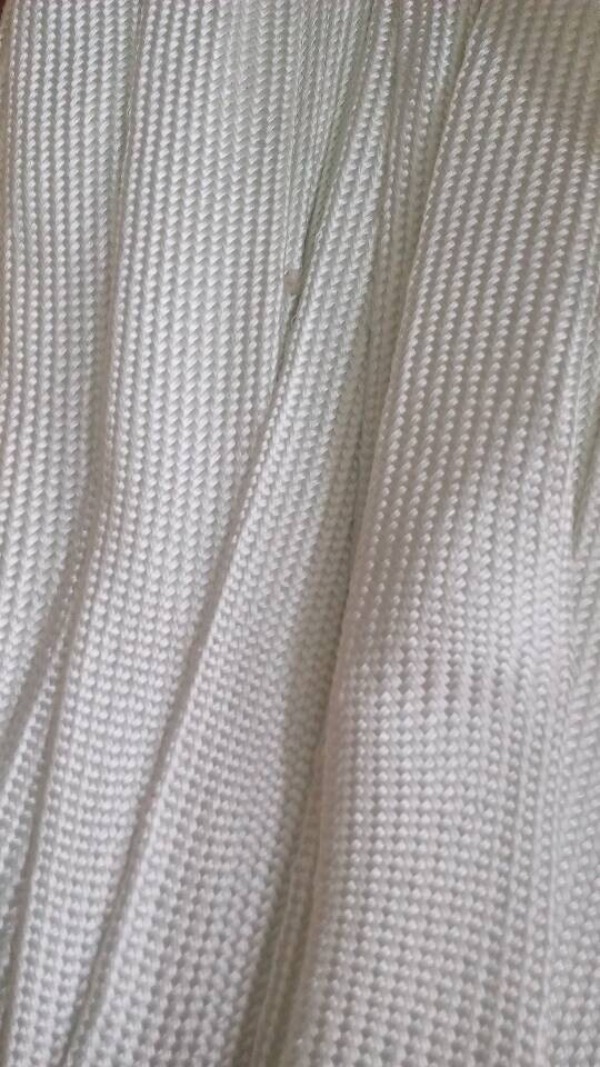
The finished outside diameter depends on:
- component diameter
- sleeve wall thickness
- degree of braid expansion
- whether the sleeve is compressed against the component
A sleeve that fits the hose may still interfere with a nearby bracket once installed.
For tight assemblies, supply the maximum permitted finished outside diameter together with the hose or cable dimensions.
Do Not Select Sleeve Size From Flat Width Alone
Some tubular textiles are supplied or measured in a flattened condition.
Flat width and usable internal diameter are related, but they should not be treated as interchangeable without considering wall thickness and braid geometry.
For engineering drawings, it is better to specify:
- nominal inside diameter
- acceptable diameter tolerance
- wall thickness where required
- finished length
This avoids confusion when different suppliers use different flat-width measurement practices.
Cut Length or Continuous Roll?
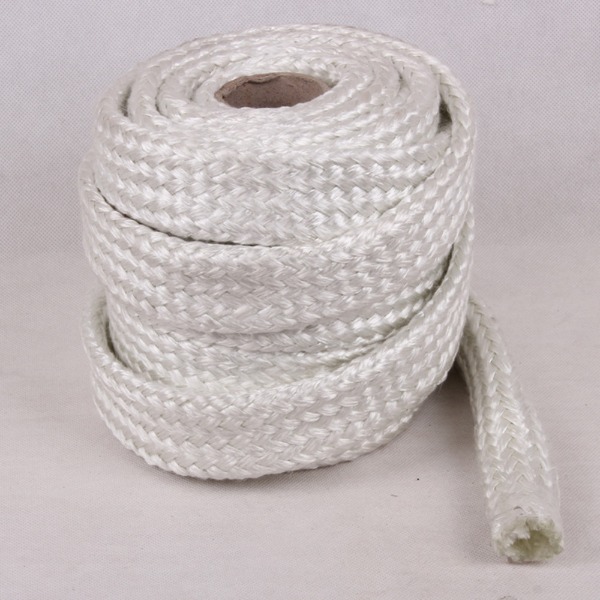
Braided silica sleeving can be supplied according to the way the customer intends to install it.
For production environments, there are usually two basic approaches.
Continuous Length
Continuous rolls give the customer flexibility to cut each piece during assembly.
This can be useful where finished hose lengths vary.
Pre-Cut Lengths
Pre-cut pieces reduce cutting operations on the customer's production line and can improve consistency for repeated assemblies.
When specifying cut pieces, account for:
- actual protected length
- movement of the hose or cable
- termination allowance
- possible dimensional change associated with braid expansion
Why Braided Sleeve Length Can Change During Expansion
This is a fundamental characteristic of braided structures.
As the sleeve expands radially, the braid angle changes. This can reduce the available axial length.
A sleeve measured in a relaxed condition may therefore become shorter when expanded over a larger component.
For applications operating near the upper end of the sleeve's expansion range, installation trials are advisable before finalizing production cut length.
This is especially important for:
- large hydraulic fittings
- irregular connectors
- stepped cable assemblies
- components with changing diameter
Termination Methods Should Match the Assembly
The end of a braided sleeve may need to be secured depending on installation orientation and component movement.
The termination method should be chosen according to the operating environment rather than applied universally.
Possible considerations include:
- temperature at the termination point
- hose movement
- need for maintenance removal
- abrasion at the sleeve end
- presence of oil or chemicals
- available space around the fitting
For high-temperature areas, any clamp, tie or thread used to retain the sleeve must itself be suitable for the local environment.
What Happens if the Sleeve Is Installed Over a Bend?
On the outside radius of a bend, the sleeve structure stretches over a longer path.
On the inside radius, the material has to accommodate a shorter path and may compress.
A properly selected braid follows the bend without excessive opening on the outside or severe bunching on the inside.
Problems become more likely when:
- the sleeve is too tight
- the hose bend radius is very small
- wall thickness is unnecessarily heavy
- the sleeve is installed under axial tension
Dynamic hose applications should be evaluated in the bent and moving condition, not only while the assembly is lying straight on a workbench.
Braided Silica Sleeve Is a Thermal Product, Not a Universal Hose Guard
Silica fiber provides excellent high-temperature capability, but plain braided silica should not automatically be treated as the best material for every mechanical hazard.
If abrasion against sharp steel edges is the dominant problem, another protective sleeve may be more appropriate.
If oil sealing or liquid resistance is required, a coated construction may be preferable.
If direct molten-metal splash is the main hazard, the sleeve needs to be selected for that specific exposure.
Applications containing several hazards may require a combined protection system.
Buying Specification for Braided Silica Sleeve
A complete purchasing specification prevents most sizing and installation errors.
| RFQ Item | Information to Provide |
|---|---|
| Application | Hydraulic hose, cable, wire harness, pipe or other component |
| Component OD | Actual measured outside diameter |
| Maximum fitting OD | Largest fitting or connector the sleeve must pass over |
| Required ID | If already defined by engineering drawing |
| Sleeve length | Continuous roll or cut length |
| Heat source | Exhaust, furnace, hot pipe, engine, heater or other source |
| Heat-source temperature | Normal and peak values |
| Distance from heat source | Important for radiant exposure |
| Component temperature limit | Maximum allowable hose or cable temperature |
| Movement | Stationary, vibrating or continuously flexing |
| Available installation space | Maximum allowable finished sleeve OD where relevant |
| Other hazards | Abrasion, oil, chemicals, weather or molten splash |
| Quantity | Prototype, production batch or annual requirement |
Example: Selecting a Sleeve for a Hydraulic Hose Near Exhaust
Assume a hydraulic hose has an outside diameter of 28 mm and a crimped coupling outside diameter of 39 mm.
The hose passes 30 mm from a hot exhaust component.
There are two possible production methods.
Method A: Sleeve Installed Before Crimping
The sleeve only needs to fit comfortably over the 28 mm hose body.
The ferrule can then be crimped after sleeve installation if the hose assembly process permits it.
Method B: Sleeve Installed After the Hose Is Completed
The sleeve must pass over the 39 mm coupling.
A larger nominal sleeve or a braid construction with sufficient expansion may therefore be required.
These two assemblies use the same hose but may require different sleeve specifications.
This is why fitting installation must be discussed before confirming diameter.
Example: Protecting a Cable Bundle Near a Furnace Door
Consider a 22 mm cable bundle passing through a 45°C general plant environment but running for 600 mm beside a furnace door where local radiant heat is substantially higher.
The engineering target is not necessarily to cover the entire cable run.
A braided silica sleeve can be applied specifically over the high-exposure zone, provided:
- the sleeve extends beyond the main radiant area
- the selected diameter follows the cable bundle without excessive looseness
- the cable bend radius is preserved
- connectors do not prevent installation
This localized approach can be more practical than adding heavy insulation to the full cable length.
When to Consider a Texturized Sleeve Instead
Braided construction is useful when dimensional stability, routing and compact installation are priorities.
Some stationary applications need greater insulation volume rather than maximum compactness.
For these conditions, a bulkier textile can be more suitable.
BSTFLEX also manufactures a Heat Insulation Texturized Silica Sleeve for applications where a more substantial insulation structure is required.
Typical candidates include stationary hot pipes and industrial lines where outside diameter is less restrictive.
BSTFLEX Braided Silica Fiber Sleeve
The BSTFLEX High Temperature Resistant Braided Silica Sleeve is manufactured as a flexible tubular silica fiber braid for high-temperature protection of hoses, cables, wiring and other heat-sensitive components. The current product page specifies maximum temperature resistance up to 1,200°C.
For the wider product family, see the BSTFLEX Silica Sleeve category.
Questions Buyers Ask Before Ordering
How do I select the correct braided silica sleeve diameter?
Start with the actual outside diameter of the hose, cable or wire bundle. If the sleeve must pass over fittings or connectors, measure the largest of those components as well. The installation method determines which dimension controls sleeve selection.
Can braided silica sleeve expand over hose fittings?
A braided sleeve normally has some radial flexibility, but the amount depends on braid geometry and construction. Excessive expansion can open the braid and reduce coverage, so fitting size should be provided before ordering.
Can braided silica sleeve be used on moving hydraulic hoses?
Yes, provided the sleeve construction, diameter and length allow the hose to bend and move without excessive restriction. Dynamic assemblies should be checked throughout their full movement range.
Can silica braided sleeve protect electrical cable?
Yes. It can provide external thermal protection around electrical cables, wire bundles, sensors and instrumentation. Thermal protection should not be confused with a specified electrical dielectric insulation rating.
Does wall thickness affect thermal insulation?
Wall structure influences the amount of silica fiber between the heat source and the protected component. A heavier wall can provide additional insulation volume, but it also increases finished diameter and may reduce flexibility.
What is the difference between silica fiber sleeve and braided silica fiber sleeve?
Silica fiber sleeve describes the material family broadly. Braided silica fiber sleeve identifies a specific tubular construction in which silica yarns are interlaced to create a flexible and dimensionally stable sleeve.
Can braided silica sleeve be supplied in custom sizes?
Yes. BSTFLEX can evaluate custom internal diameter, construction, length, cut pieces and packaging for OEM and industrial projects.
Send Dimensions Before Sending Only a Temperature
For a braided sleeve project, temperature tells only part of the story.
A useful RFQ should include the component outside diameter, maximum fitting or connector diameter, required protected length, local temperature, heat-source distance, movement condition and available installation clearance.
For custom hose or cable assemblies, drawings and photographs can significantly improve sleeve selection.


 IPv6 network supported