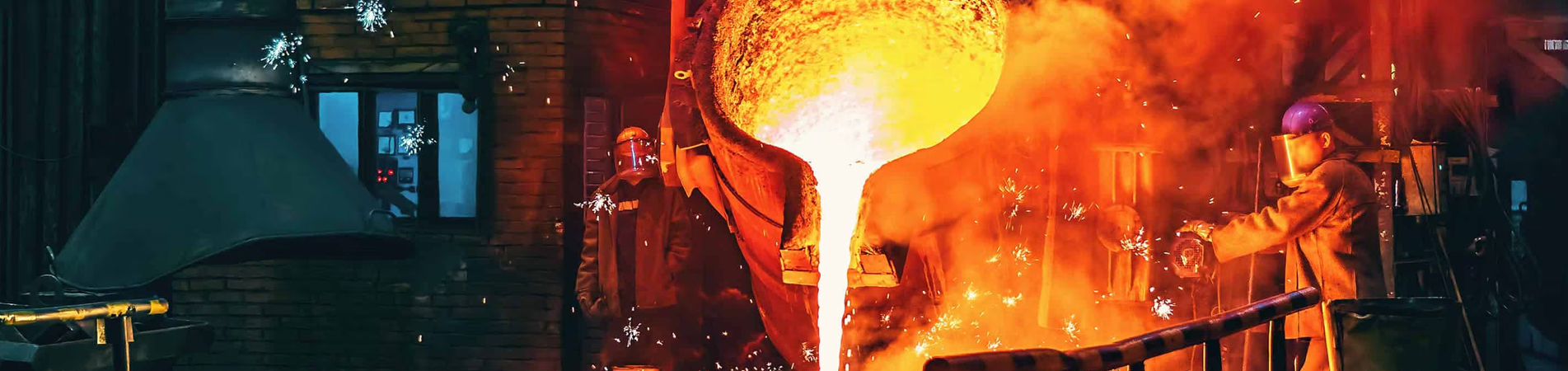
What Temperature Can a Silica Sleeve Withstand?
When buyers ask for the temperature rating of a silica sleeve, they are often asking the wrong question first.
The more useful question is not simply, "How hot can the sleeve get?" It is, "What thermal condition will the sleeve actually face, and what temperature must the hose, cable or pipe underneath remain below?"
Those are different engineering questions.
A silica sleeve temperature rating may describe the temperature resistance of the silica textile itself, but the performance of an installed sleeve depends on far more than fiber chemistry. Exposure time, sleeve thickness, distance from the heat source, airflow, direct contact, radiant load and the temperature limit of the protected component all influence the final result.
BSTFLEX currently manufactures different silica sleeve constructions for severe thermal environments. The braided silica sleeve product is specified with maximum temperature resistance up to 1,200°C, while the texturized silica sleeve product is specified for continuous temperature resistance up to 1,000°C. These figures apply to the respective product constructions and should not be interpreted as one universal rating for every silica sleeve.

There Is No Single Silica Sleeve Temperature
A thermal sleeve can experience several different temperatures at the same time.
Imagine a cable routed beside a hot exhaust pipe. The exhaust surface may be extremely hot, the surrounding air may be much cooler, the outside of the silica sleeve may reach another temperature, and the cable jacket underneath may remain cooler still.
All four values can be different.
For this reason, a proper thermal assessment separates the system into distinct temperature points.
| Temperature | Meaning | Why It Matters |
|---|---|---|
| Heat-source temperature | Temperature of exhaust pipe, furnace wall, manifold or process equipment | Defines how severe the source is |
| Ambient temperature | Air temperature surrounding the sleeve | Important for continuous exposure |
| Sleeve surface temperature | Temperature on the outside of the textile | Relevant to material durability |
| Temperature under the sleeve | Temperature reaching the protected component | Shows actual thermal protection performance |
| Component temperature limit | Maximum safe temperature of hose, cable, seal or wiring | Defines the real design target |
A high silica sleeve may tolerate a severe heat source while the protected component underneath still has a much lower allowable temperature.
Maximum Temperature and Continuous Temperature Are Not the Same
This distinction is one of the most important points in any silica sleeve temperature guide.
Maximum temperature usually describes the highest temperature a material or construction can tolerate under specified conditions.
Continuous temperature describes a condition that the product is intended to withstand over a much longer period.
The two should never be used interchangeably.
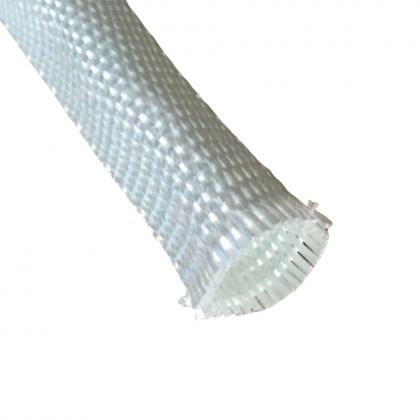
BSTFLEX's High Temperature Resistant Braided Silica Sleeve is currently specified with maximum temperature resistance up to 1,200°C or 2,192°F.
The Heat Insulation Texturized Silica Sleeve is currently specified for continuous temperature resistance up to 1,000°C or 1,832°F.
These numbers describe two different constructions and two different rating conditions.
A buyer should therefore avoid writing an RFQ such as:
"Need silica sleeve for 1,000°C."
That statement does not reveal whether 1,000°C is:
- the furnace chamber temperature
- the exhaust surface temperature
- the air temperature surrounding the sleeve
- a short thermal spike
- a continuous contact temperature
- the temperature the protected component must survive
Each case can lead to a different sleeve recommendation.

Radiant Heat Can Be Severe Even Without Direct Contact
A hose or cable does not need to touch a hot surface to experience damaging heat.
Exhaust manifolds, turbochargers, furnace walls, heated dies and hot process equipment radiate thermal energy across open space.
This is common in:
- engine compartments
- industrial furnaces
- foundries
- steel plants
- generator sets
- casting equipment
- heat-treatment systems
In radiant-heat applications, the temperature of the source may be much higher than the actual temperature at the sleeve.
The distance between the source and the protected component becomes critical.
A hose positioned 20 mm from a hot exhaust pipe may experience a substantially greater radiant load than the same hose positioned 150 mm away, even if the exhaust temperature does not change.
Airflow and shielding also influence the result.
Direct Contact Creates a Different Thermal Condition
Direct contact should be treated separately from radiant exposure.
If a silica sleeve rests against a hot pipe or metal surface, conductive heat transfer becomes important.
The textile no longer receives energy only through radiation and hot air. Heat can move directly from the hot surface into the sleeve.
This can produce much higher local temperatures than a nearby non-contact installation.
For contact applications, engineers should evaluate:
- actual hot-surface temperature
- contact area
- duration of contact
- sleeve wall thickness
- pressure between the sleeve and surface
- temperature limit of the protected component
A sleeve suitable for protecting a cable located near an exhaust pipe should not automatically be assumed to provide the same performance when pressed directly against that pipe.
Short Temperature Peaks Must Be Defined by Time
"Short-term exposure" is too vague for engineering use.
Five seconds, five minutes and one hour are all short compared with a year of continuous operation, but they impose very different thermal loads.
For intermittent high-temperature applications, a useful specification should state:
| Parameter | Example |
|---|---|
| Normal temperature | 300°C |
| Peak temperature | 700°C |
| Peak duration | 3 minutes |
| Frequency | 12 cycles per shift |
| Cooling period | 20 minutes between peaks |
This gives far more useful information than simply stating "maximum 700°C."
Why Exposure Time Changes the Result
Thermal protection is time-dependent.
When a sleeve is first exposed to heat, the protected hose or cable does not instantly reach the same temperature as the hot environment.
Heat must move through the sleeve wall and into the component underneath.
The longer the exposure continues, the more time the system has to approach thermal equilibrium.
This means a silica sleeve may reduce a short heat pulse very effectively while the same assembly could reach a much higher internal temperature during an eight-hour continuous exposure.
For this reason, both temperature and time are needed when evaluating silica sleeve heat resistance.

Silica Fiber Temperature Is Not the Same as Assembly Temperature
This difference causes many misunderstandings in high-temperature insulation.
A silica fiber may remain structurally stable at a temperature that would destroy the hose or cable underneath it.
For example, the sleeve material may tolerate a severe thermal environment while a rubber hose cover, polymer wire insulation or electrical connector has a much lower allowable operating temperature.
The goal of the sleeve is therefore not merely to survive.
It must reduce heat transfer enough to keep the protected component within an acceptable range.
This is why the best high-temperature sleeve is not necessarily the sleeve with the highest published fiber temperature.
Wall Thickness Changes Thermal Performance
Two silica sleeves made from similar fiber can behave differently if their wall structures are different.
A thicker textile wall increases the distance heat must travel before reaching the protected component.
It also generally introduces more fiber and trapped air into the insulation layer.
However, a heavier wall has trade-offs.
- finished outside diameter increases
- weight increases
- flexibility may decrease
- tight installation spaces become more difficult
- bend behavior can change
For a stationary pipe, additional wall thickness may be easy to accommodate.
For a moving hydraulic hose inside a compact machine, the same thickness may be impractical.
Why Trapped Air Matters
The thermal behavior of textile insulation is not determined solely by the fiber itself.
The air trapped within the structure also contributes to insulation performance.
Texturized silica yarn creates a bulkier structure than a compact yarn system. This can create additional small air spaces throughout the sleeve wall.
That is one reason a texturized silica sleeve can be useful where insulation performance is more important than minimum outside diameter.
BSTFLEX's texturized silica sleeve is specified for continuous operation up to 1,000°C for the current construction.
Does an Air Gap Improve Protection?
Sometimes, but not always.
A controlled air gap can reduce direct conductive heat transfer, particularly where the heat source and protected component are separated.
However, the effectiveness of that gap depends on:
- gap size
- air movement
- orientation
- radiant heat intensity
- whether hot air becomes trapped
An air gap that works well in an open engine compartment may behave differently inside a confined furnace enclosure.
For this reason, "loose sleeve equals better insulation" is not a reliable universal rule.
Airflow Can Help or Hurt
Air movement changes convective heat transfer.
Cool airflow around a sleeved component may remove heat from the outside of the sleeve and reduce equilibrium temperature.
Hot airflow can do the opposite.
Applications exposed to hot process gas, engine-bay airflow or furnace leakage should therefore be assessed differently from still-air laboratory conditions.
Silica Sleeve Temperature for Hydraulic Hose Protection
In hydraulic systems, the temperature limit of the hose is often much lower than the capability of a high silica sleeve.
The protective objective is therefore to prevent excessive external heat from reaching:
- hose cover
- reinforcement
- inner tube
- fluid
- fittings
A useful hydraulic hose thermal assessment should include:
| Required Data | Reason |
|---|---|
| Hose temperature rating | Defines allowable hose operating condition |
| External heat-source temperature | Defines source severity |
| Distance from source | Influences radiant load |
| Exposure time | Determines heat accumulation |
| Hose movement | Affects sleeve construction and contact conditions |
| Required service life | Helps determine suitable thermal margin |
For hydraulic hose installations requiring flexible tubular protection, see the braided silica sleeve.

Silica Sleeve Temperature for Electrical Cable
Electrical cable presents a different limitation.
The conductor itself may tolerate more heat than the surrounding insulation, jacket, connector or termination.
The weakest temperature-sensitive component often determines the allowable operating condition.
A cable protection calculation should therefore consider:
- cable jacket temperature rating
- connector rating
- continuous current load
- external heat source
- internal heat generated by the cable
- available ventilation
A silica fiber sleeve may reduce external heat exposure, but it can also reduce heat dissipation from a heavily loaded cable if the cable itself generates significant heat.
That is why cable applications should not be judged only by external temperature.
Exhaust Systems: Surface Temperature Matters More Than Gas Temperature
Exhaust applications often include several temperature values.
The exhaust gas inside a pipe may be hotter than the outside metal surface.
The sleeve or nearby protected component interacts primarily with the pipe surface and the surrounding radiant environment, not directly with the exhaust gas inside the tube.
For a silica sleeve installed near an exhaust system, useful information includes:
- exhaust pipe surface temperature
- distance from the sleeve to the pipe
- engine load condition
- duration of peak exhaust temperature
- airflow around the assembly
- temperature limit of the protected hose or cable
If the silica sleeve is placed directly around the exhaust pipe, the engineering objective changes from component protection to heat containment.
Example: Cable Near a Hot Exhaust Pipe
Assume an electrical cable is routed 40 mm from a hot exhaust pipe.
The exhaust surface reaches 650°C during high-load operation, but the cable jacket should remain below 150°C.
The correct question is not:
"Can silica fiber survive 650°C?"
The correct question is:
"Can this sleeve construction, at this distance and exposure time, reduce the cable temperature sufficiently to remain below 150°C?"
The answer depends on:
- sleeve thickness
- distance from the exhaust
- radiant view factor
- airflow
- exposure duration
- temperature generated internally by the cable
This is why thermal testing of the actual assembly can be more valuable than comparing material ratings alone.
Example: Hydraulic Hose Beside a Furnace
Consider a hydraulic hose positioned near an industrial furnace.
The furnace chamber may operate at 1,000°C, but the hose is outside the chamber and sees a local air temperature of 180°C plus intense radiant heat from the furnace door area.
Specifying the sleeve only from the 1,000°C furnace rating would overstate the actual direct exposure.
The more useful measurements are:
- furnace surface temperature facing the hose
- distance between furnace and hose
- ambient air temperature at the hose
- hose surface temperature before insulation
- maximum allowable hose temperature
Those measurements give a practical basis for determining sleeve construction and wall thickness.
Foundry Applications Require More Than Temperature Data
A foundry may expose a sleeve to very high radiant heat and also to molten-metal splash.
These hazards should not be combined into one temperature number.
A silica sleeve that performs well under radiant heat is not automatically qualified for direct molten-metal splash.
If splash is possible, specify:
- metal type
- metal temperature
- expected splash volume
- contact duration
- angle of impact
- required coating or outer treatment
The thermal resistance of high silica fiber and molten-metal release behavior are separate performance considerations.
What Does 1,200°C Maximum Temperature Actually Mean?
For BSTFLEX's current braided silica sleeve product, the listed maximum temperature resistance is up to 1,200°C.
This should be read as a property of that specified product construction, not as a guarantee that every hose or cable underneath it can operate continuously in a 1,200°C environment.
The sleeve may remain physically intact while the protected component reaches an unacceptable temperature.
Maximum material temperature therefore answers:
"Can the sleeve itself tolerate severe heat?"
It does not fully answer:
"Will the component beneath the sleeve remain cool enough?"
What Does 1,000°C Continuous Temperature Mean?
The current BSTFLEX texturized silica sleeve specification states continuous temperature resistance up to 1,000°C.
This refers to the sleeve construction's intended continuous high-temperature capability.
It still does not replace application-level thermal analysis.
A component underneath the sleeve may require a much lower operating temperature, and the thermal result will vary with:
- sleeve thickness
- installation tightness
- heat source geometry
- air movement
- component diameter
- exposure time
Braided and Texturized Silica Sleeve Temperature Comparison
| BSTFLEX Product | Construction | Published Temperature Information | Typical Direction |
|---|---|---|---|
| High Temperature Resistant Braided Silica Sleeve | Braided silica fiber | Maximum temperature resistance up to 1,200°C | Flexible hose, cable, wire and compact installations |
| Heat Insulation Texturized Silica Sleeve | Texturized silica fiber | Continuous temperature resistance up to 1,000°C | Applications requiring increased insulation volume |
The table compares current published product specifications. It should not be used to conclude that one construction is automatically better for every application.
How Sleeve Diameter Can Influence Temperature Performance
Diameter is normally discussed as an installation issue, but it can also influence thermal behavior.
A sleeve stretched aggressively over an oversized component may change its braid angle and reduce textile coverage.
A sleeve that is excessively loose may create irregular air spaces and inconsistent contact with the component.
For stable thermal performance, the sleeve should operate within the intended diameter range of its construction.
Can a Double Layer Increase Heat Protection?
Adding a second sleeve layer can increase insulation thickness, but it should not automatically be treated as the preferred solution.
A double layer changes:
- total wall thickness
- finished outside diameter
- flexibility
- installation effort
- air spaces between layers
If a single standard sleeve cannot provide the required thermal separation, it may be better to evaluate a heavier-wall or texturized construction rather than simply doubling material.
Temperature Margin Should Be Included in Product Selection
Industrial systems rarely remain at one perfectly stable temperature.
Actual equipment may experience:
- startup peaks
- overload events
- exhaust regeneration cycles
- reduced cooling airflow
- seasonal ambient changes
- production-rate increases
- component movement toward the heat source
Designing exactly to the highest measured normal temperature can therefore leave little margin for real operating variation.
A sensible thermal protection specification includes appropriate safety margin based on the severity of failure and the reliability of the available temperature data.
When a Temperature Test Is Better Than a Datasheet Comparison
Datasheets are useful for narrowing material choices.
They cannot reproduce every installation.
Testing becomes particularly valuable when:
- the component operates close to its maximum allowable temperature
- the heat source has complex geometry
- airflow changes during operation
- failure would have serious consequences
- the sleeve is used directly on exhaust piping
- multiple insulation layers are involved
- the installation has not been used before
A practical test should measure both the hot-side condition and the temperature beneath the sleeve.
Useful Temperature Measurement Locations
For an application trial, temperature sensors can be positioned at several locations.
| Measurement Point | Purpose |
|---|---|
| Heat source | Confirms actual source temperature |
| Outer sleeve surface | Shows thermal load reaching the sleeve |
| Between sleeve and component | Shows insulation performance |
| Protected component surface | Confirms whether the design target is achieved |
| Ambient air nearby | Provides environmental reference |
For repeatable results, the operating load and test duration should also be documented.

Common Mistakes When Comparing Silica Sleeve Temperature Ratings
Comparing Maximum Temperature With Another Product's Continuous Temperature
This is not a direct comparison. Both products must be compared under equivalent rating conditions.
Using Furnace Chamber Temperature as Sleeve Temperature
A sleeve outside the furnace may experience a completely different local temperature.
Ignoring the Temperature Limit of the Protected Component
The sleeve can survive while the hose or cable underneath is already too hot.
Ignoring Exposure Duration
A five-minute peak is not equivalent to continuous operation over an entire production shift.
Assuming More Thickness Is Always Better
Additional thickness can improve insulation but may cause mechanical and installation problems.
Ignoring Airflow
Natural or forced convection can substantially change final temperatures.
How to Specify Silica Sleeve Temperature in an RFQ
Instead of writing:
"Need high temperature silica sleeve, 1,000°C."
provide a temperature profile such as:
- protected component: hydraulic hose
- hose outside diameter: 32 mm
- maximum hose fitting diameter: 44 mm
- heat source: exhaust pipe
- exhaust surface temperature: 620°C
- distance from exhaust to hose: 35 mm
- local ambient temperature: 110°C
- maximum hose temperature permitted: 135°C
- exposure: continuous for 8 hours
- peak exposure: 700°C exhaust surface for 10 minutes
- hose movement: moderate flexing
This gives enough information to begin meaningful sleeve selection.
Temperature Selection Checklist
| Question | Required Before Selection? |
|---|---|
| What is the actual heat source? | Yes |
| What is its normal temperature? | Yes |
| What is the peak temperature? | Yes |
| How long does the peak last? | Yes |
| Is the sleeve in direct contact? | Yes |
| What is the local ambient temperature? | Recommended |
| What temperature must the protected component stay below? | Yes |
| Is there forced airflow? | Recommended |
| Is the component moving? | Yes for hose and cable systems |
| Are molten splash, oil or abrasion also present? | Yes if applicable |
BSTFLEX Silica Sleeve Options for High-Temperature Applications
High Temperature Resistant Braided Silica Sleeve
The BSTFLEX braided silica sleeve is designed for flexible thermal protection around hoses, cables, wiring and other components. Its current product specification lists maximum temperature resistance up to 1,200°C or 2,192°F.
Heat Insulation Texturized Silica Sleeve
The BSTFLEX texturized silica sleeve is intended for high-temperature insulation where a bulkier textile structure is beneficial. Its current specification lists continuous temperature resistance up to 1,000°C or 1,832°F.
Both products belong to the wider BSTFLEX Silica Sleeve range.
Frequently Asked Questions About Silica Sleeve Temperature
What is the maximum temperature of a silica sleeve?
The answer depends on the exact product construction. BSTFLEX's current braided silica sleeve product is specified with maximum temperature resistance up to 1,200°C or 2,192°F. This rating applies to that specific product and should not be generalized to every silica sleeve construction.
What is the continuous temperature rating of silica sleeving?
Continuous temperature capability depends on the sleeve design. BSTFLEX's current texturized silica sleeve is specified for continuous temperature resistance up to 1,000°C or 1,832°F.
Can a silica sleeve operate continuously at 1,200°C?
A maximum temperature rating should not automatically be interpreted as a continuous-service rating. The specific product specification, duration of exposure and installed conditions must be reviewed before continuous operation is determined.
Can silica sleeve protect a hose from a 1,000°C furnace?
Potentially, but the furnace chamber temperature alone is not enough to answer the question. The temperature and distance of the surface facing the hose, local ambient temperature, exposure duration, sleeve construction and maximum allowable hose temperature must all be considered.
Is radiant heat easier to protect against than direct contact heat?
They are different thermal conditions. Radiant exposure depends strongly on distance and geometry, while direct contact introduces conductive heat transfer. A sleeve should be evaluated according to the actual mode of exposure.
Does thicker silica sleeving provide better temperature protection?
Greater insulation thickness can reduce heat transfer, but it also increases outside diameter, weight and stiffness. The correct wall construction must balance thermal performance and installation requirements.
Does braided silica sleeve have the same temperature rating as texturized silica sleeve?
Not necessarily. Construction, yarn and product specification can result in different published temperature ratings. Each product should be evaluated separately.
Can silica sleeve be used directly on an exhaust pipe?
Certain silica constructions may be suitable for high-temperature pipe insulation, but direct exhaust contact is different from protecting a hose or cable near an exhaust. Pipe surface temperature, insulation thickness and required external temperature should be evaluated before selection.
Why is the protected component temperature more important than the sleeve temperature?
The sleeve may survive temperatures far above the safe operating limit of the hose, cable or wire underneath it. The design is successful only if the protected component remains within its own allowable temperature range.
Should I test the complete assembly?
Testing is recommended for critical applications, unusual geometries or systems operating close to component temperature limits. Measuring temperature beneath the sleeve gives much more useful information than relying only on fiber temperature ratings.
Need to Select a Silica Sleeve by Temperature?
Send BSTFLEX the heat-source temperature, exposure duration, distance from the heat source, component outside diameter, maximum allowable component temperature and whether the sleeve will experience radiant heat or direct contact.
For demanding applications, provide an installation photograph or drawing showing the relative position of the hose, cable or pipe and the heat source.


 IPv6 network supported