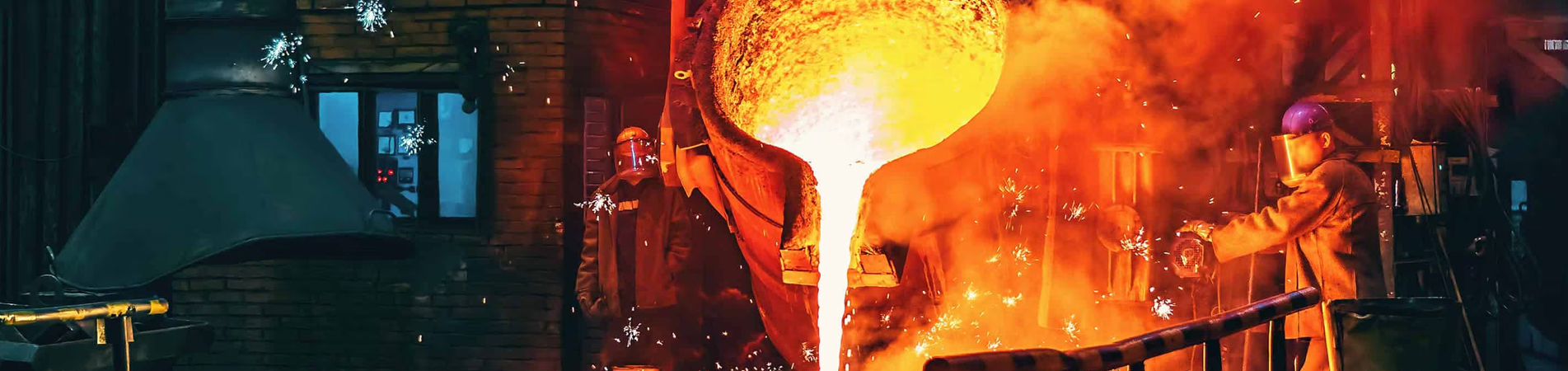
Power-generation equipment can place cables, instrumentation lines, hoses and tubing close to turbines, engines, boilers, exhaust systems and other continuously heated components. Unlike short thermal events, many of these installations operate for hours or days at a time, making continuous exposure an important part of sleeve selection.
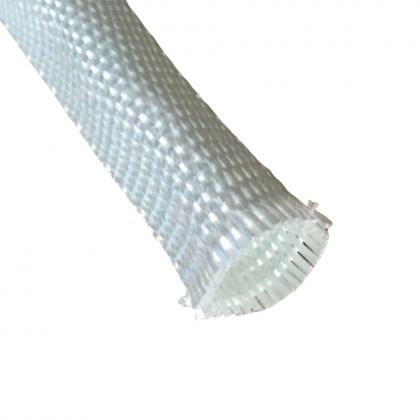
A silica sleeve for power generation can provide an external high-temperature textile barrier around suitable components where additional thermal protection is required. The correct construction should be selected from the actual component geometry, heat source, operating cycle and required temperature at the protected component.
BSTFLEX manufactures silica sleeve and silica sleeving in braided and texturized constructions for demanding industrial thermal environments.
Power Generation Creates Several Different Heat-Protection Problems
The term “power plant heat protection” covers multiple installations that should not be treated as one identical thermal condition.
| Equipment Area | Typical Protected Component | Main Thermal Concern |
|---|---|---|
| Turbine area | Sensor cables, instrumentation and tubing | High ambient and radiant heat |
| Generator engine | Wiring, hoses and control lines | Exhaust and engine heat |
| Boiler area | Instrumentation, cables and service lines | Continuous hot-surface exposure |
| Exhaust system | Adjacent cables, hoses and tubing | Localized radiant heat |
| Steam or hot process piping | Nearby cables and small lines | Radiation and possible contact heat |
The first step is therefore to identify what is being protected and which component creates the heat.
Continuous Exposure Matters in Power-Generation Equipment
A generator operating for several hours under load creates a different thermal duty from a machine that experiences a brief heat peak.
When specifying a power generation silica sleeve, separate:
- normal continuous operating temperature
- short-duration peak temperature
- duration of each heat cycle
- frequency of thermal cycling
- shutdown and cooling conditions
The maximum temperature capability of the sleeve alone does not establish the temperature that will be reached by the cable, hose or tube beneath it.
Silica Sleeve Around Turbine Instrumentation
Turbine systems require extensive instrumentation for temperature, pressure, vibration and operating control. Sensor leads and instrumentation cables may need to pass through high-temperature zones before reaching a cooler termination point.
A silica sleeve for turbine applications can be considered where these cables require an additional external barrier against radiant or ambient heat.
For instrumentation protection, provide:
- finished cable outside diameter
- connector dimensions
- required protected length
- temperature at the cable location
- maximum allowable cable temperature
- routing and bend radius
- vibration conditions
Turbine Exhaust Heat Protection
Exhaust sections around turbines and industrial engines can become strong localized heat sources.
If silica sleeving is installed around a cable or hose beside the exhaust, the objective is to reduce external thermal exposure to that component.
If the sleeve is intended to cover the exhaust pipe itself, the problem becomes exhaust insulation and requires a different set of design inputs.
For Exhaust-Adjacent Component Protection
Record:
- distance from the exhaust
- exhaust surface temperature
- component OD
- component temperature limit
- exposure duration
For Direct Exhaust Insulation
Record:
- pipe OD
- pipe surface temperature
- required insulation length
- available radial clearance
- bends, joints and flexible sections
Boiler Cable and Instrumentation Protection
Boiler installations can expose thermocouple wires, sensor leads, electrical cables and control lines to continuous radiant and ambient heat.
A boiler heat protection sleeve should be selected according to the temperature where the cable actually runs, rather than the internal combustion or steam temperature alone.
The process temperature inside the boiler can be very different from the thermal condition experienced by external instrumentation.
Useful information includes:
| Parameter | Why It Matters |
|---|---|
| Boiler surface temperature | Defines a nearby radiant source |
| Distance to cable | Affects radiant heat exposure |
| Local ambient temperature | Defines continuous environmental heat |
| Cable temperature limit | Defines the protection objective |
| Operating duration | Separates continuous duty from brief exposure |
Silica Sleeve for Generator Wiring
Diesel and gas generator sets combine electrical systems with engines, exhaust pipes and enclosed operating spaces.
Cable runs near exhaust manifolds, turbochargers, after-treatment components or hot engine surfaces can require additional thermal protection.
For a generator heat protection sleeve, evaluate:
- cable or wire-bundle OD
- connector size
- distance from the heat source
- generator load profile
- enclosure ventilation
- maximum cable temperature
- vibration
In enclosed generator packages, local air temperature can also remain elevated after the exhaust or engine surface temperature has stabilized.
Hydraulic and Lubrication Lines Near Hot Equipment
Power-generation installations can contain hydraulic control systems and lubrication circuits in areas containing hot piping, turbines or engines.
The hose or line may carry fluid within its normal temperature range while receiving additional external radiant heat.
A braided silica sleeve can provide a flexible textile barrier around suitable hoses, but sleeve selection should include:
- actual hose OD
- fitting and ferrule OD
- hose movement
- radiant heat source
- distance from the source
- oil exposure
Plain silica textile should not automatically be considered oil-tight or chemically impermeable. Where repeated fluid exposure is expected, that requirement should be specified separately.
Hot Pipe and Steam-Line Areas
Electrical cables and instrumentation lines may share space with steam piping or other hot process lines.
Even without direct contact, a small separation distance can produce significant radiant exposure.
Where possible, increasing the distance between the sensitive component and hot pipe is an effective first design measure. When routing cannot be changed, thermal sleeving can provide an additional protective layer.
For direct pipe insulation requirements, see the dedicated selection guidance for silica sleeve used around high-temperature pipe and tubing.
Braided Silica Sleeve for Flexible Routing
Power-generation systems often contain cables and hoses that must follow curved routes around machinery, brackets and structural components.
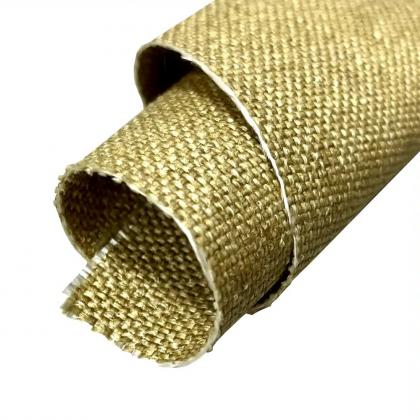
A braided tubular construction can accommodate curved routing while maintaining coverage around the protected component.
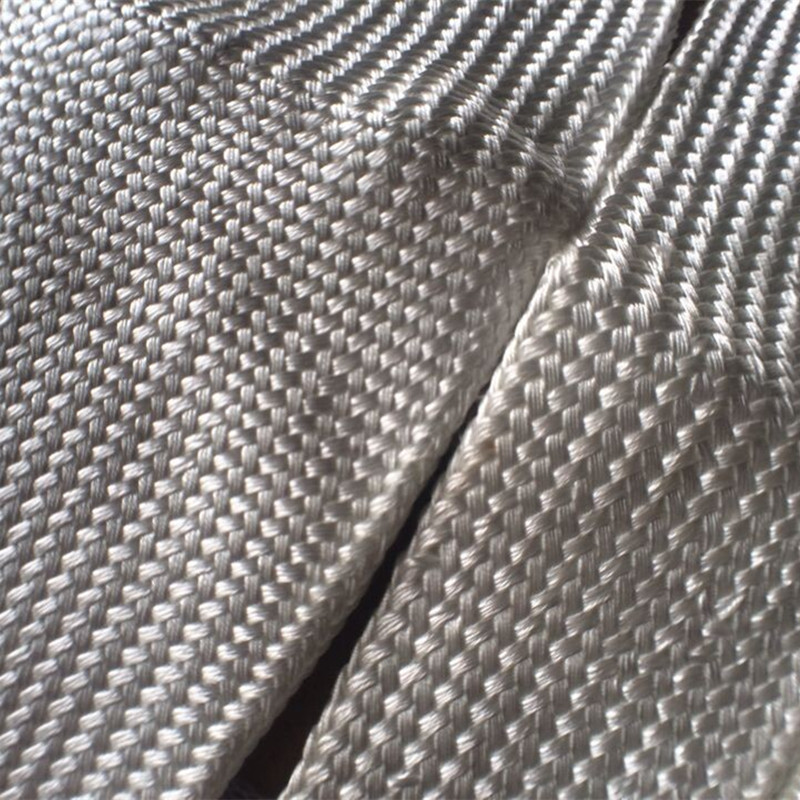
BSTFLEX's High Temperature Resistant Braided Silica Sleeve is intended for flexible thermal protection of suitable hoses, cables, wires and tubing.
The current product page lists maximum temperature resistance up to 1,200°C (2,192°F). This should not be interpreted as the allowable continuous operating temperature of every protected component or installation.
Texturized Silica Sleeve for Insulation Applications
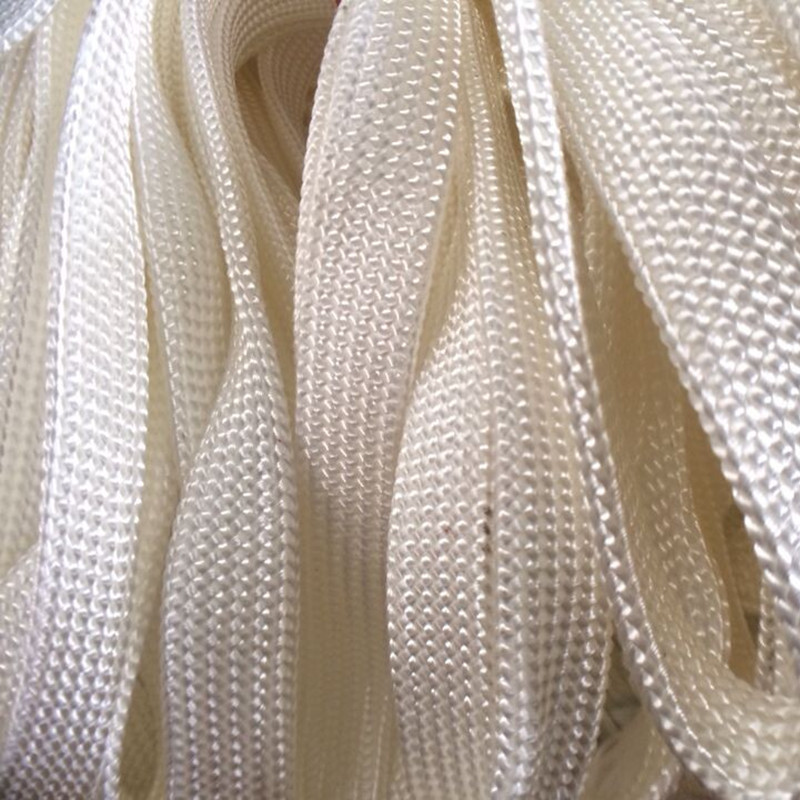
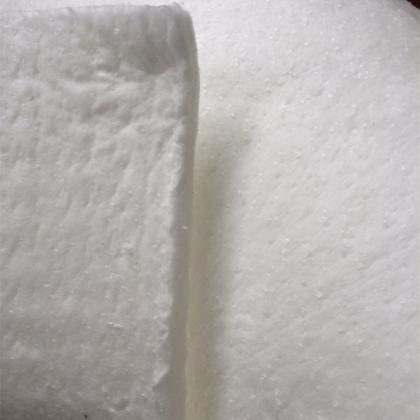
Where the application requires a soft, bulked textile construction, a texturized silica sleeve provides another option.
The Heat Insulation Texturized Silica Sleeve is specified for continuous temperature resistance up to 1,000°C (1,832°F).
Texturized describes the yarn structure; braided describes the sleeve-forming method. These terms should not be treated as mutually exclusive performance categories. Compare the actual product construction and installed result.
Do Not Select by Temperature Rating Alone
A temperature number does not describe the complete thermal system.
For example, two identical sleeves may produce different protected-component temperatures if:
- one is positioned 20 mm from the heat source and the other 100 mm away
- one installation has strong airflow and the other is enclosed
- one sleeve fits closely and another is compressed under a clamp
- one component operates continuously and the other intermittently
The correct question is therefore not only “What temperature can the sleeve withstand?” but also “What temperature must the protected component remain below?”
Measure the Finished Component Before Ordering
For cables, hoses and tubing, use the actual finished outside diameter.
Also measure the largest connector, fitting, coupling or ferrule that the sleeve must pass over during installation.
| Component | Dimension to Provide |
|---|---|
| Cable | Finished cable or bundle OD and connector size |
| Hydraulic hose | Hose OD and fitting/ferrule OD |
| Instrumentation tube | Tube OD and largest fitting |
| Pipe | Actual pipe OD and geometry |
Vibration and Abrasion Need Separate Evaluation
Turbines, generators and engines can expose sleeved components to substantial vibration.
A silica fiber sleeve may meet the thermal requirement while still experiencing mechanical wear if it rubs against metal brackets or adjacent equipment.
Identify:
- contact points
- sharp edges
- expected movement
- vibration level
- required retention method
Thermal resistance should not be used as a substitute for an abrasion specification.
Example: Generator Cable Near an Exhaust System
Consider a control cable routed beside the exhaust pipe of a generator operating under continuous load.
The cable has a finished OD of 18 mm and is exposed along a 700 mm section. The exhaust surface is considerably hotter than the cable's allowable continuous temperature.
A practical selection sequence is:
- Confirm the cable temperature limit.
- Measure the cable OD and connector dimensions.
- Determine the distance from the exhaust.
- Record normal and maximum exhaust surface temperatures.
- Define generator load and operating duration.
- Check airflow inside the enclosure.
- Select an appropriate sleeve construction and diameter.
- Measure cable temperature during representative operation where required.
Example: Turbine Instrumentation Lead
A sensor lead may leave a hot turbine area and enter a cooler cable tray after a relatively short run.
In this case, protecting only the high-exposure section may be more practical than covering the entire cable.
The protected length should extend through the actual hot zone while allowing for movement, heat spread and termination requirements.
Information to Include in an RFQ
| RFQ Item | Information to Supply |
|---|---|
| Equipment | Turbine, generator, boiler, exhaust, hot pipe or other system |
| Protected component | Cable, wire, hose, tube or pipe |
| Component OD | Actual finished outside diameter |
| Largest fitting/connector | Maximum OD the sleeve must pass over |
| Protected length | Length exposed to the thermal zone |
| Continuous temperature | Normal operating condition |
| Peak temperature | Maximum short-duration exposure |
| Heat source | Exhaust, turbine, boiler surface, hot pipe or engine |
| Distance | Separation from the heat source where applicable |
| Movement | Static, vibration or repeated flexing |
| Environment | Oil, water, chemicals, abrasion or other exposure |
| Quantity | Prototype, maintenance or production requirement |
Custom Silica Sleeving for Power-Generation Equipment
BSTFLEX supplies silica sleeving for high-temperature industrial assemblies requiring different diameters, lengths and installation configurations.
For OEM and industrial projects, customers can provide component drawings, actual OD, fitting dimensions, required length, temperature conditions and quantity for review.
Available starting points include the braided silica sleeve and texturized silica sleeve.
Request a Silica Sleeve Quote for Power-Generation Equipment
Frequently Asked Questions
Can silica sleeve be used around turbine cables?
It can be considered for suitable turbine instrumentation and cable applications requiring additional external thermal protection. Cable temperature limits, local heat exposure, vibration and applicable system requirements should be reviewed before selection.
Can silica sleeving protect generator wiring from exhaust heat?
Silica sleeving can provide an external thermal barrier around suitable generator cables located near exhaust components. Exhaust surface temperature, distance, operating duration and maximum allowable cable temperature should be included in the evaluation.
Can silica sleeve be used around boiler instrumentation?
It can be considered for suitable instrumentation wires and cables exposed to high ambient or radiant heat around boiler equipment. Use the temperature at the cable location rather than only the internal boiler temperature for product selection.
Is silica sleeve suitable for hydraulic hoses in power plants?
Silica sleeving can provide thermal protection for suitable hydraulic hoses near hot equipment. Hose dimensions, fitting OD, movement, radiant heat and fluid exposure should all be considered.
Should the entire cable or hose be covered?
Not necessarily. Where heat exposure is localized, sleeving can be concentrated on the affected section if the installation has been evaluated accordingly.
Does a 1,000°C or 1,200°C sleeve keep the protected component below that temperature?
No. A sleeve material temperature rating does not define the resulting component temperature. Heat source, distance, duration, airflow, sleeve construction and installation all influence the protected temperature.


 IPv6 network supported