
A small diameter silica sleeve is used when a thermocouple wire, sensor lead, fine cable or narrow tube needs external heat protection without the bulk of an oversized sleeve. Selection depends on the finished component diameter, connector size, braid construction, installed length and available clearance. The smallest nominal sleeve is not automatically the best fit.
BSTFLEX can review standard and custom small diameter silica sleeve requirements within its silica sleeve range. Buyers should provide the actual cable or wire dimensions, the largest installation obstruction and the thermal conditions before confirming a production size.
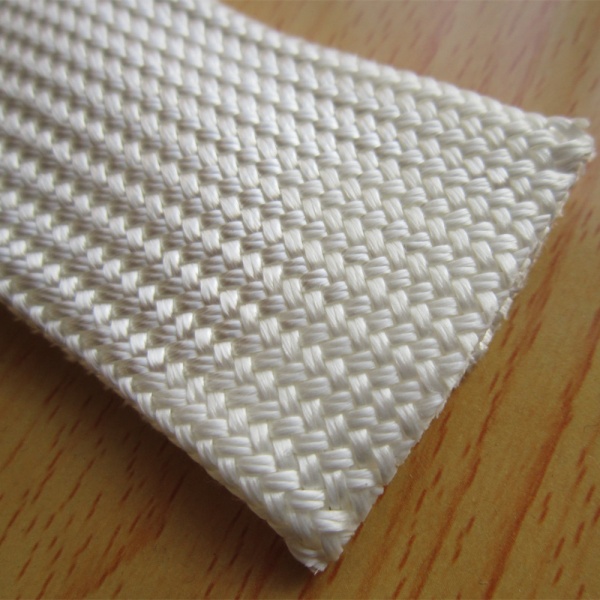
Small Diameter Sleeving Is a Precision Fit Problem
A narrow protective sleeve has less room for sizing error than a large industrial sleeve. A small change in component diameter, braid opening or connector size can determine whether the sleeve installs smoothly or becomes excessively tight.
Terms such as small bore silica sleeve, narrow silica sleeving and precision braided silica sleeve describe a dimensional requirement, but they do not define one universal inside diameter or wall thickness. The practical size must be confirmed for the selected construction.
For small components, the buyer should distinguish between:
| Dimension | Why It Matters |
|---|---|
| Finished wire or cable OD | Defines the normal installed fit. |
| Maximum connector OD | Determines whether the sleeve can be installed after termination. |
| Bundle OD | Applies when several fine wires are protected together. |
| Required installed sleeve OD | Confirms clearance in a restricted route. |
| Protected length | Defines coverage through the actual hot zone. |
Applications for Fine Wire and Sensor Protection
A fine wire silica sleeve, fine wire heat protection sleeve or small gauge wire heat sleeve can be evaluated for selected electrical and instrumentation assemblies exposed to severe ambient or radiant heat. A silica sleeve for sensor wire and a sensor wire heat protection sleeve describe the same basic purchasing objective: protect a narrow finished assembly without creating unnecessary bulk.
Typical components can include:
- thermocouple extension wire;
- temperature sensor leads;
- flame sensor wiring;
- burner control wire;
- engine sensor cable;
- small instrumentation cable;
- fine electrical wire bundles;
- small-bore sensor tubing.
The sleeve provides an external thermal layer. It does not replace the component's electrical insulation, connector specification or required system qualification.
Small Bore Tubing and Sensor Tubing
A silica sleeve for small bore tubing can be evaluated where instrument tubing or sensor tubing passes close to a hot surface. For a sensor tubing silica sleeve, measure the actual tube OD, unions and local fittings. The thermal objective may be to protect the tube from external heat or to control heat loss from the tube itself; these are different duties.
Do not select a small-bore sleeve only from the nominal tube designation. Confirm the finished tubing size, bend geometry, fittings and required installed clearance.
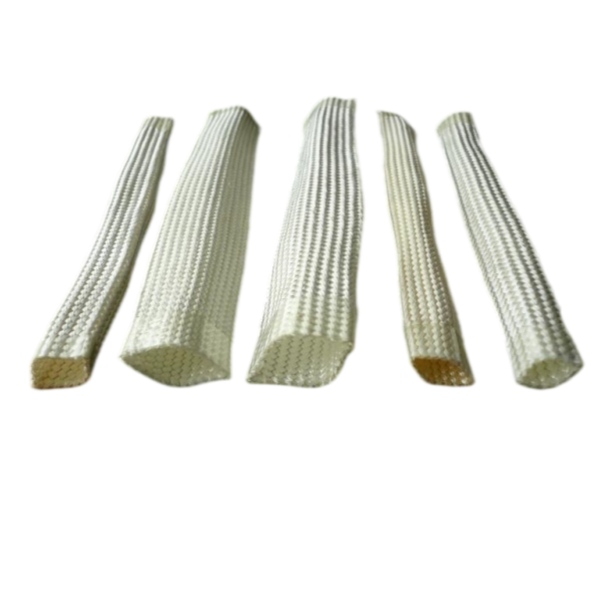
Silica Sleeve for Thermocouple Wire
A thermocouple probe may operate in a hotter location than the extension wire and connector attached to it. A silica sleeve for thermocouple wire can be considered for the cable section exposed to furnace walls, heated ducts, burner areas or hot process equipment.
Measure the finished thermocouple cable rather than the conductor alone. Include insulation, shielding and the outer jacket in the diameter. Where the sleeve must pass over a thermocouple connector, record the connector dimensions separately.
For broader furnace-routing considerations, see the furnace cable and thermocouple protection guide.
Sensor Wire and Sensor Cable Heat Protection
A sensor wire silica sleeve can protect a localized section of wiring near an engine, exhaust component, furnace opening or heated machine surface. Where several sensor leads share the same route, measure the assembled bundle at its widest point.
A high temperature sensor cable sleeve should be selected around the cable's allowable temperature, not only the temperature rating of the silica textile. The heat source, distance, exposure duration and airflow influence the final cable temperature.
For general cable and harness selection, use the silica sleeve for cable and wire protection guide.
Precision Braiding and Textile Coverage
A precision braided small diameter silica sleeve uses a tubular braid to maintain coverage around a small component while allowing the sleeve to follow bends. This construction is also described in purchasing searches as precision braided silica sleeve or precision silica sleeving. The installed result depends on yarn size, braid angle, carrier arrangement, production tension and the diameter over which the sleeve is fitted.
When a small diameter braided silica fiber sleeve is stretched over a component larger than its intended range, the braid can open and the supplied length can decrease. A sleeve should not be approved only because it can be forced over the component.
Review:
- coverage in the normal installed state;
- coverage at the largest connector or local enlargement;
- length after installation;
- behavior through the tightest bend;
- finished outside diameter in the equipment route.
BSTFLEX's High Temperature Resistant Braided Silica Sleeve is the primary product page for braided construction and custom dimensional review.
Do Not Select by Nominal ID Alone
A nominal inside diameter is a useful starting value, but it does not describe the complete fit of a flexible textile tube.
For a small diameter high silica sleeve, confirm:
- how the ID is measured;
- whether the sleeve is inspected on a mandrel;
- the acceptable installed fit;
- the maximum connector pass-over requirement;
- the allowed finished outside diameter;
- the dimensional tolerance required by the assembly.
Do not apply a rigid-tube tolerance to a braided textile without defining the inspection method. The goal is repeatable assembly fit.
The silica sleeve sizing guide explains how component OD, fitting OD and wall construction should be specified together.
Connector Pass-Over Changes the Required Size
A fine cable may have a small body diameter and a connector several times larger. The installation sequence therefore needs to be decided before the sleeve size is released.
Sleeve Installed Before the Connector
The sleeve can normally be selected around the cable or wire bundle. This produces a closer installed fit and avoids oversizing the full sleeve for one connector.
Sleeve Installed After the Connector
The sleeve must pass over the connector or use another approved installation arrangement. Radial expansion should be checked on a representative sample because excessive opening can change coverage and length.
Do not order a much larger sleeve solely to clear the connector without checking the resulting fit on the fine cable.
Bend Radius and Restricted Routing
Small sensor wires and thermocouple cables often route through confined equipment areas. A compact sleeve must follow the route without forcing the cable below its minimum bend radius.
Inspect the sleeve at:
- the inside of the tightest bend;
- the outside of the bend;
- support clips and brackets;
- connector transitions;
- branch points in a small wire bundle.
A low profile silica sleeve can be useful where installed space is limited, but the proposed construction still needs enough coverage and insulation for the application. “Thin” and “small diameter” should not be treated as automatic performance claims.
Wall Thickness and Installed Outside Diameter
Wall thickness affects the finished assembly envelope and can influence thermal performance. On a fine cable, even a modest change in textile wall can be significant relative to the component diameter.
When specifying a thin silica sleeve or compact construction, provide both the maximum installed OD and the required thermal objective. Do not reduce the wall only to achieve fit without evaluating the protected-component temperature.
Likewise, do not assume a thicker sleeve is always better. Additional material can increase bulk, reduce flexibility and interfere with connector or bracket clearance.
Cut Lengths for Small Components
Small-diameter sleeves are often supplied as short pieces for repeat assemblies. The purchase drawing should separate the supplied cut length from the coverage required after installation.
For pre-cut small diameter silica sleeve pieces, define:
- finished supplied length;
- length measurement condition;
- end condition;
- minimum installed coverage;
- quantity per pack;
- part identification.
Use the cut-length and end-finishing guide when preparing an OEM drawing.
Temperature Rating and Cable Temperature Are Different
The temperature capability of the silica sleeve material is not the same as the temperature reached by the thermocouple lead, sensor wire or fine cable underneath it.
For selection, provide:
- normal heat-source temperature;
- peak temperature and duration;
- distance from the heat source;
- local ambient temperature;
- maximum allowable cable temperature;
- continuous or cyclic operating time.
For temperature terminology and installed-system considerations, see What Temperature Can a Silica Sleeve Withstand?
Thermal Protection Is Not a Dielectric Rating
A silica sleeve used around sensor wiring is an external heat-protection component. It should not automatically be assigned a voltage rating, dielectric strength or electrical insulation class.
The original wire and cable system must remain suitable for its electrical duty. Any additional electrical requirement should be specified and verified separately.
Sample Approval for Precision Sleeving
Because small-dimensional differences have a greater effect on fine components, sample approval should include installation on the actual cable, wire bundle or representative mandrel.
Record:
- approved sleeve construction;
- component and connector dimensions;
- measurement method;
- supplied length;
- installed coverage;
- finished outside diameter;
- end condition;
- packaging and part identification.
Visual similarity alone is not enough for repeat OEM production. The accepted dimensions and fit should be linked to the approved sample and drawing.
RFQ Checklist for Small Diameter Silica Sleeves
| RFQ Item | Information to Provide |
|---|---|
| Protected component | Thermocouple wire, sensor lead, fine cable, small wire bundle or small-bore tube. |
| Component OD | Actual finished outside diameter. |
| Connector OD | Largest connector or termination the sleeve must pass over. |
| Installed clearance | Maximum permitted finished sleeve OD. |
| Protected length | Required supplied length and installed coverage. |
| Routing | Bends, branch points, supports and movement. |
| Thermal conditions | Continuous and peak exposure, source distance and cable temperature limit. |
| Supply format | Continuous roll or pre-cut pieces. |
| Inspection | Diameter method, length tolerance, end condition and sample approval. |
| Quantity | Prototype, trial batch and annual requirement. |
Small Diameter Silica Sleeving From BSTFLEX
BSTFLEX can evaluate small diameter silica sleeving for thermocouple wires, sensor cables, fine electrical leads and other compact high-temperature assemblies. For an inquiry described as small diameter silica sleeve for wire, cable and hose protection, identify the exact component and installation sequence so the product is not selected from a generic phrase alone. Actual minimum diameter, tolerance and construction availability must be confirmed for the selected product and order quantity.
Send the component drawing, finished OD, largest connector, required coverage, operating conditions and quantity for review. Prototype samples can be used to verify fit before OEM production.
Request a Quote for Small Diameter Silica Sleeves
Frequently Asked Questions
What is a small diameter silica sleeve?
It is a compact tubular silica textile selected for fine wires, sensor leads, thermocouple cables, small wire bundles or narrow tubing. The actual size range depends on the product construction and manufacturing capability.
Can silica sleeve protect thermocouple wire?
It can provide external thermal protection for suitable thermocouple and extension-wire sections. The cable insulation, connector temperature and complete installation still need to meet the application requirements.
How do I choose the inside diameter for a fine cable?
Measure the finished cable OD and the largest connector or termination involved in installation. Confirm the fit on a sample rather than selecting only from conductor size.
Can a precision braided silica sleeve expand over a connector?
Braided construction can provide radial flexibility, but expansion can change coverage and length. Connector pass-over should be verified with the selected construction and a representative assembly.
Can small diameter silica sleeve be supplied in cut lengths?
Custom cut-length requirements can be reviewed. Specify supplied length, installed coverage, end condition, packaging and inspection requirements.
How do I choose a small diameter silica sleeve?
Start with the finished component OD, then check the largest connector, fitting or local enlargement. Review bend radius, installed clearance, cut length and the thermal condition before approving the size.
Can silica sleeve be used for small gauge wire?
A silica sleeve for small gauge wire can be evaluated as an external thermal layer. The wire insulation, connector, electrical rating and complete assembly still need to meet the application requirements.
Does small diameter silica sleeve provide electrical insulation?
Do not infer a dielectric rating from thermal sleeving. Electrical insulation requirements must be verified separately for the complete cable system.


 IPv6 network supported