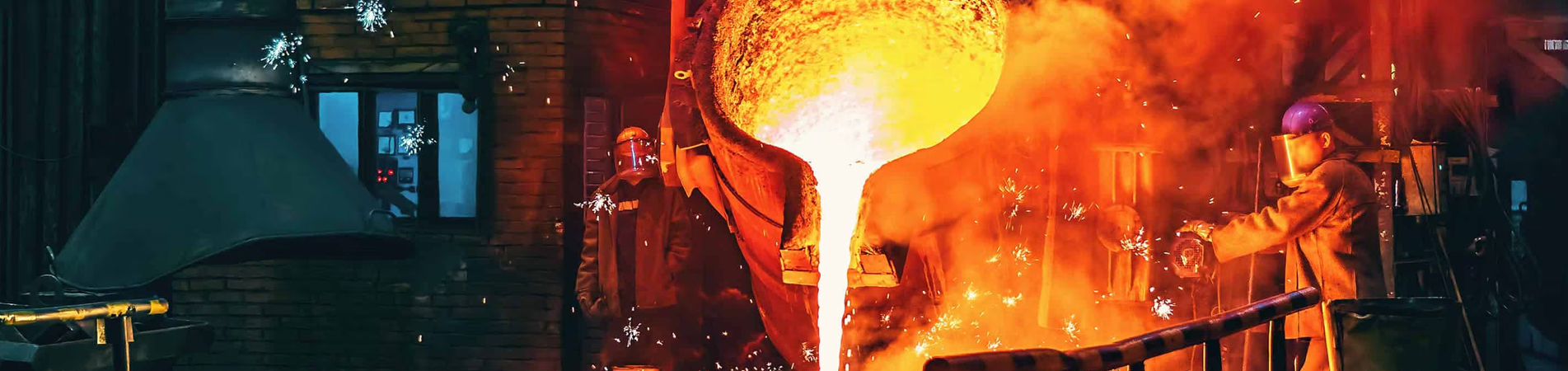
Silica Sleeve for Furnace Cable and Thermocouple Protection
Temperature measurement and control around furnaces depend on relatively small components that often operate in severe thermal environments. Thermocouple extension wires, sensor leads, burner wiring, ignition cables and instrumentation cables may be routed close to furnace walls, heated ducts, burners, kilns or other hot process equipment.
The sensing element may be designed for high temperatures, but the associated cable assembly can have a much lower allowable temperature. Protecting that cable section is therefore an important part of furnace instrumentation design.
A silica sleeve for furnace cable provides a flexible high-temperature textile barrier around suitable wires and cable assemblies exposed to elevated ambient or radiant heat. The correct sleeve must be selected according to the actual cable temperature, heat source, distance, cable diameter, routing and installation conditions.
The Thermocouple Can Survive Where Its Cable Cannot
A common mistake in furnace applications is to focus only on the temperature capability of the thermocouple probe.
A thermocouple assembly consists of more than the sensing junction. Depending on the system, it can include a probe, protection tube, connection head, thermocouple wire, extension wire, connectors and instrumentation cable.
These components do not necessarily have the same temperature capability.
The probe may extend into a very hot process while the cable outside the furnace depends on its insulation system remaining below a much lower temperature. Radiant heat escaping from a furnace opening or conducted through surrounding metalwork can expose this cable to conditions beyond its normal design range.
This is where a thermocouple wire protection sleeve can become part of the external thermal management system.
Where Furnace Instrumentation Cables Encounter Heat
Heat exposure is rarely uniform throughout an industrial furnace installation. A cable may pass through several thermal zones between the sensor and the control system.
| Location | Typical Thermal Concern | Protection Consideration |
|---|---|---|
| Furnace wall | High local surface temperature | Radiant and conducted heat |
| Inspection or access door | Intermittent hot gas and radiant exposure | Temperature changes during opening |
| Burner area | Concentrated heat | Routing distance and shielding |
| Thermocouple connection area | Heat conducted from probe assembly | Connector and cable temperature limits |
| Hot process duct | Continuous radiant heat | Distance between cable and hot surface |
| Furnace roof | High ambient temperature | Continuous exposure |
| Control cable transition | Changing temperature zone | Required protected length |
Silica Sleeve as an External Thermal Barrier
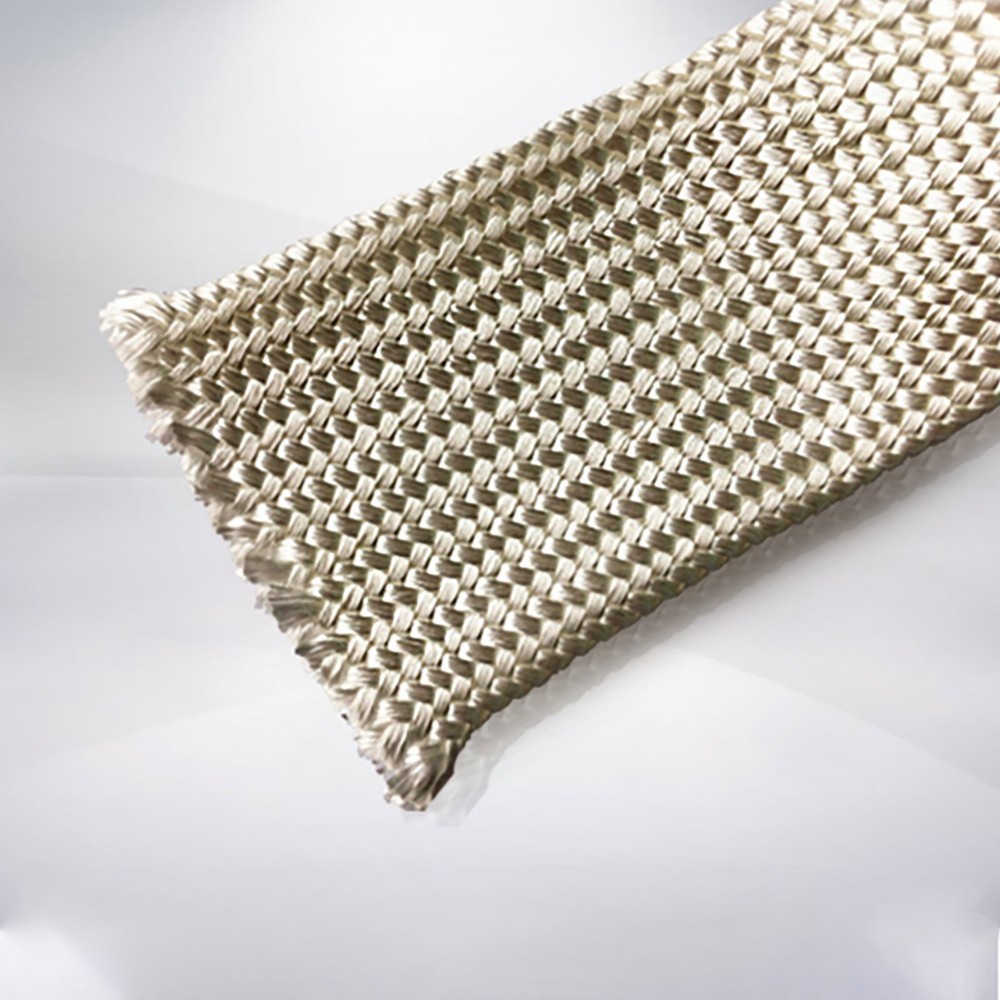
Silica fiber is used in high-temperature textile products because it retains useful properties at temperatures beyond those suitable for many conventional organic textile materials.
When used as a high temperature thermocouple sleeve, the silica textile surrounds the cable and creates an additional thermal layer between the cable surface and the surrounding furnace environment.
This can be particularly useful where the cable is exposed to radiant heat from a furnace wall, hot pipe, duct, burner assembly or adjacent process equipment.
However, the sleeve should not be viewed as a way to make an ordinary cable capable of operating at the same temperature as the furnace chamber. The objective is to manage external heat exposure while keeping the protected cable within its allowable operating conditions.
Thermal Protection and Electrical Insulation Are Different Requirements
This distinction is particularly important for thermocouple and instrumentation applications.
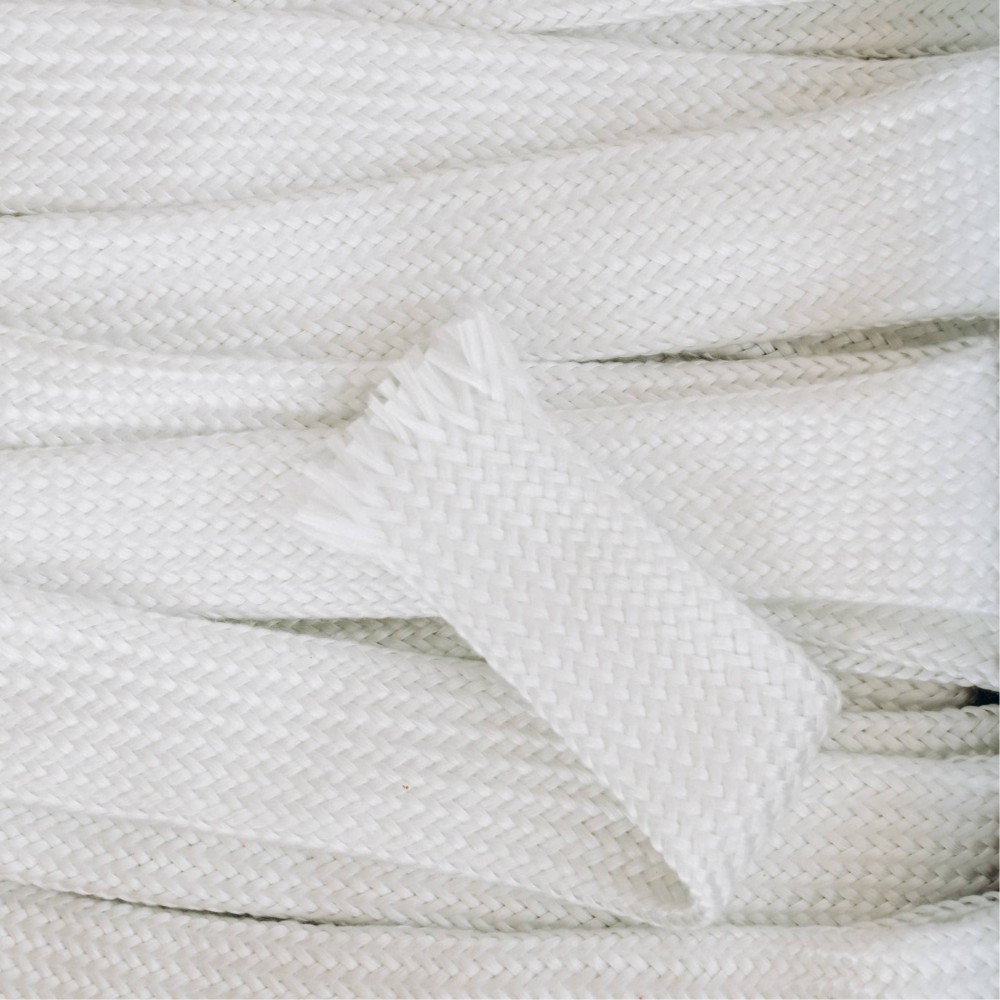
A silica sleeve can provide high-temperature external thermal protection, but that does not automatically establish a specific electrical insulation, dielectric strength or voltage rating for the complete cable system.
The original cable insulation remains responsible for its specified electrical performance unless the complete assembly has been separately designed and tested for another purpose.
For furnace wiring, therefore, two specifications should be considered independently:
| Requirement | Function |
|---|---|
| Electrical insulation | Maintains required electrical separation and voltage performance |
| Thermal protection sleeve | Reduces external thermal exposure to the cable assembly |
This is why selecting a sleeve only from its temperature rating is not sufficient.
Measure the Finished Cable, Not the Conductor
The correct furnace cable heat protection starts with the physical dimensions of the finished assembly.
A thermocouple wire or instrumentation cable may contain conductors, individual insulation, shielding, fillers and an outer jacket. The sleeve has to fit around the complete cable rather than the bare conductor.
For a single cable, measure the actual finished outside diameter.
For multiple sensor wires routed together, measure the finished bundle diameter after the wires have been arranged as they will be installed.
When requesting a custom sleeve, provide:
- Finished cable outside diameter
- Number of wires or cables in the bundle
- Maximum connector outside dimension
- Required protected length
- Minimum routing bend radius
- Whether the sleeve is installed before or after connectors
Thermocouple Connectors Can Determine Sleeve Size
Connector dimensions are often more important than cable diameter during installation.
For example, a thermocouple cable may have a relatively small outside diameter while its connector is several times larger. A sleeve selected only around the cable OD may fit perfectly along the wire but fail to pass over the connector.
Before selecting the sleeve, determine the installation sequence.
Installation Before the Connector
If the sleeve is installed before the connector is terminated, the sleeve can normally be sized primarily around the finished cable diameter and required fit.
Installation Over an Existing Connector
If the assembly is already terminated, the sleeve must either pass over the connector or another installation method must be used.
This should be established before production because excessive oversizing simply to clear a connector can leave the sleeve unnecessarily loose along the cable.
Radiant Heat Is Often the Main Furnace-Cable Problem
A cable does not have to touch a furnace to overheat.
Radiant energy from hot furnace walls, doors, exhaust ducts and process equipment can raise the cable surface temperature significantly. This can occur even when the surrounding air temperature appears acceptable.
The severity of radiant exposure depends on several variables:
- Temperature of the heat source
- Distance between the cable and heat source
- Orientation of the cable
- Exposure duration
- Air movement
- Existing heat shields
- Surface characteristics of surrounding components
For this reason, an RFQ stating only "furnace temperature 1000°C" does not fully describe the cable's thermal environment.
Four Temperatures Should Be Considered
For demanding furnace applications, it is useful to separate the temperature specification into four different values.
| Temperature | Meaning |
|---|---|
| Process temperature | Temperature inside the furnace or process |
| Heat-source temperature | Temperature of the furnace wall, duct or nearby hot component |
| Cable-location temperature | Actual thermal condition where the cable is routed |
| Maximum allowable cable temperature | Temperature limit of the protected cable system |
The fourth value is especially important. The objective of a furnace sensor cable protection system is not simply to survive the furnace environment; it is to help maintain the protected component within an acceptable thermal condition.
Braided Silica Sleeve for Furnace Cable Routing
Cables and sensor leads rarely travel in perfectly straight lines. They may route around furnace structures, brackets, ducts and machinery before reaching a junction box or control cabinet.
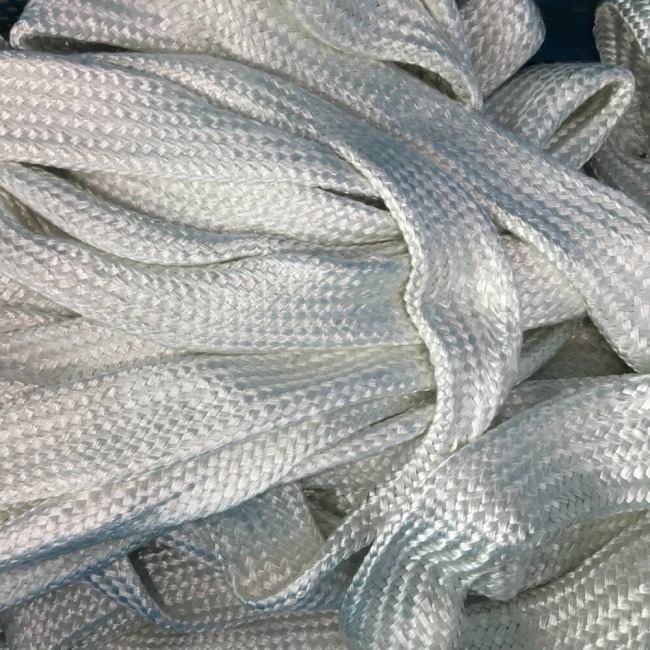
A braided construction can accommodate curved routing while maintaining a tubular protective form.
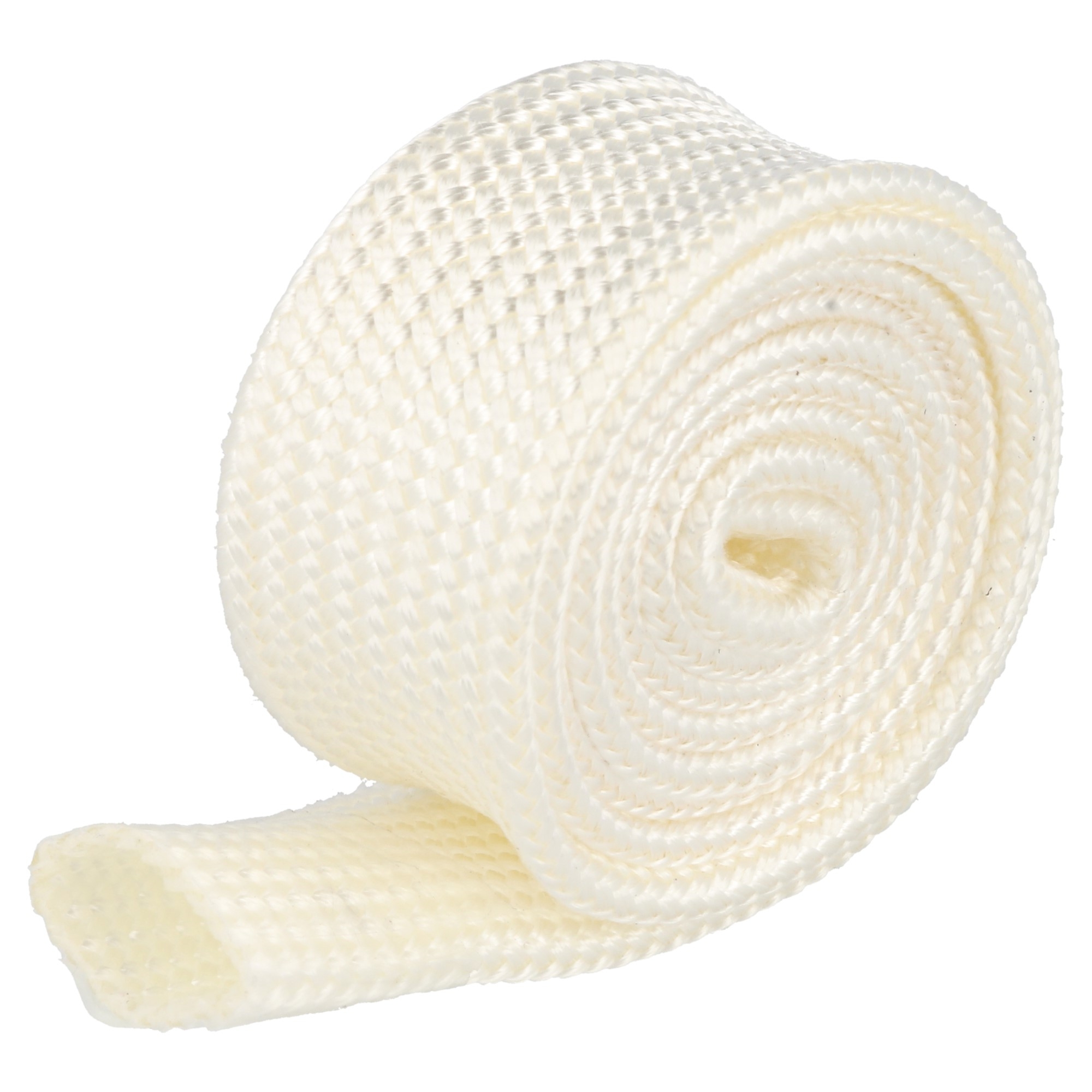
Our High Temperature Resistant Braided Silica Sleeve is designed for flexible high-temperature protection around cables, wires, hoses and related components. The product has maximum temperature resistance up to 1,200°C (2,192°F).
That maximum value should not be interpreted as the allowable operating temperature of the cable inside the sleeve. The cable temperature limit remains a separate design constraint.
Texturized Silica Sleeve for High-Temperature Insulation
Where a soft and conformable textile construction is preferred, a texturized silica sleeve can provide another option.
The Heat Insulation Texturized Silica Sleeve is specified for continuous temperature resistance up to 1,000°C (1,832°F) and can be used for suitable high-temperature cable, wire, hose and industrial insulation applications.
Selection between braided and texturized constructions should consider diameter, flexibility, installation method, routing and actual thermal exposure.
Applications Beyond the Thermocouple Lead
The same thermal problem occurs in several other electrical and instrumentation circuits around furnaces.
Burner Wiring
Burner systems can place ignition and control wiring close to concentrated heat sources. Routing, clearance and cable temperature limits should be evaluated before specifying the protection.
Flame Sensor Wiring
Flame-detection components may operate close to burners or combustion chambers. The sensor itself and its connecting cable can have different thermal limits.
Furnace Door Sensor Cables
Limit switches, position sensors and monitoring devices installed around furnace doors can experience intermittent thermal exposure when doors are opened.
Industrial Temperature Sensor Leads
RTDs and other process sensors can also have lead wires routed beside hot equipment. A high-temperature external sleeve can be considered where the cable requires additional protection from the surrounding environment.
Instrumentation and Control Wiring
Furnace installations may contain pressure, flow, position and other instrumentation whose cables pass through high-temperature zones before reaching a cooler control area.
Protect Only the Length That Needs Protection
It is not always necessary to cover an entire cable run.
Many furnace applications contain a localized hot zone near the sensor, burner, furnace wall or process duct. Once the cable is routed away from that area, its temperature exposure may decrease significantly.
Identifying the actual hot zone can simplify installation and reduce unnecessary material.
For an OEM assembly, specify the starting and ending points of the protected section on the drawing rather than providing only the total cable length.
Routing Can Be More Important Than Adding More Insulation
A thermal sleeve should be considered as one part of the overall installation.
If a cable can be moved farther away from a furnace opening, exhaust duct or burner, changing the routing may reduce its heat exposure substantially. Physical heat shields, air gaps and other thermal barriers can also work together with sleeving.
For severe installations, a combination of:
- Improved cable routing
- Greater distance from the heat source
- Thermal sleeving
- Reflective or physical shielding
- Appropriate high-temperature cable
may be more effective than relying on a single component.
Bend Radius and Cable Movement
Thermocouple leads on stationary furnace equipment may experience relatively little movement. Cables connected to furnace doors, moving sensors or adjustable equipment can be different.
Repeated bending changes the mechanical requirements of the sleeve.
Where movement occurs, consider:
- Minimum cable bend radius
- Sleeve flexibility
- Braid expansion during bending
- Possible rubbing against brackets
- End termination method
- Frequency of movement
A high temperature rating does not automatically establish long-term abrasion or flex-cycle performance.
Protect the Sleeve From Sharp Edges
Furnace structures often include sheet metal panels, brackets, cable trays and fabricated steel components. A silica sleeve routed directly across a sharp edge may experience mechanical wear unrelated to temperature.
Where possible, avoid sharp contact points and maintain a smooth cable path. If severe abrasion is unavoidable, identify it separately in the product specification so that an appropriate protective system can be evaluated.
Oil, Fuel and Chemical Exposure Must Be Specified Separately
Some furnace installations are located in manufacturing environments where cables can also encounter oils, lubricants, cleaning fluids or process chemicals.
A plain silica textile should not automatically be assumed to provide fluid sealing or chemical impermeability.
If fluid exposure is expected, include the fluid type and frequency of contact in the RFQ. A coated or composite construction may be required depending on the application.
Furnace Cable Protection Selection Example
Consider a temperature sensor mounted beside an industrial furnace. The probe enters the process, while its cable exits through the furnace structure and runs approximately one meter beside a hot external surface before entering a cooler cable tray.
The selection process should not begin by asking only for a sleeve capable of withstanding the furnace chamber temperature.
A more useful engineering sequence is:
- Identify the temperature rating of the existing sensor cable.
- Measure the actual cable outside diameter.
- Measure any connector the sleeve must pass over.
- Determine the length exposed to the hot zone.
- Measure or estimate the temperature at the cable location.
- Identify whether radiant heat or direct contact is the dominant heat source.
- Review routing and distance from the furnace.
- Determine whether the cable is stationary or moving.
- Select the appropriate silica sleeve construction and size.
- Validate the assembly under representative operating conditions where necessary.
This approach defines the actual protection problem instead of treating the furnace temperature as the only design parameter.
Information to Send With an RFQ
| Specification | Information Required |
|---|---|
| Protected component | Thermocouple wire, sensor cable, burner wire or instrumentation cable |
| Cable OD | Actual finished outside diameter |
| Connector dimensions | Maximum OD if sleeve must pass over connector |
| Protected length | Length exposed to the high-temperature zone |
| Process temperature | Furnace or process operating temperature |
| Cable-location temperature | Actual or estimated local exposure |
| Cable temperature limit | Maximum allowable temperature of existing cable |
| Heat source | Furnace wall, burner, duct, hot pipe or other source |
| Distance from heat source | Approximate spacing where relevant |
| Routing | Straight, curved, tight bends or moving section |
| Environment | Abrasion, oil, chemicals or other exposure |
| Quantity | Sample, prototype or production requirement |
Custom Silica Sleeving for Furnace and Industrial Instrumentation
BSTFLEX manufactures high temperature silica sleeve products for cables, wires, hoses, pipes and industrial equipment operating around severe heat sources.
For furnace instrumentation projects, sleeve diameter and length can be selected according to the actual cable assembly. Braided and texturized constructions are available for different thermal protection and installation requirements.
OEM customers can provide cable drawings, outside diameter, connector dimensions, required protected length, furnace operating conditions and estimated quantity. For complex routing or tight dimensional requirements, sample evaluation can be used before production.
Frequently Asked Questions
Can silica sleeve be used to protect thermocouple wires?
Yes. Silica sleeving can provide external high-temperature thermal protection around suitable thermocouple wires and extension cables exposed to furnace heat. The cable's own electrical insulation and temperature limits must still be considered separately.
What is the best sleeve size for a thermocouple cable?
Measure the actual finished outside diameter of the cable or wire bundle. If the sleeve must pass over a thermocouple connector, the connector dimensions must also be considered before selecting the sleeve diameter.
Can silica sleeve protect furnace sensor cables from radiant heat?
Silica sleeving can be used as part of a thermal protection system for cables exposed to radiant heat. Performance depends on heat-source temperature, distance, exposure duration, sleeve construction and the allowable temperature of the protected cable.
Does silica sleeve electrically insulate thermocouple wires?
Silica sleeve used for external heat protection should not automatically be assigned an electrical insulation or dielectric rating. Thermal protection and electrical insulation are separate design requirements.
Can silica sleeve be used around burner wiring?
It can be considered for suitable burner wiring exposed to high environmental or radiant heat. The wire temperature rating, routing, heat source and mechanical conditions should be evaluated before selection.
What temperature can a silica thermocouple protection sleeve withstand?
The temperature capability depends on the specific sleeve construction. BSTFLEX's braided silica sleeve is specified for maximum temperature resistance up to 1,200°C, while the texturized silica sleeve is specified for continuous temperature resistance up to 1,000°C. These figures should not be interpreted as the allowable temperature of the cable inside the sleeve.
Should the entire thermocouple cable be covered?
Not necessarily. If only a localized section passes through a high-temperature zone, protection can be concentrated on that section. The required length should be determined from the actual equipment layout and thermal exposure.
Can custom furnace cable protection sleeves be manufactured?
Yes. Silica sleeves can be manufactured in different diameters and lengths for furnace sensor cables, thermocouple leads, instrumentation wiring and other high-temperature assemblies according to project requirements.


 IPv6 network supported